Small Acts of Kindness: Why They Matter More Than You Think
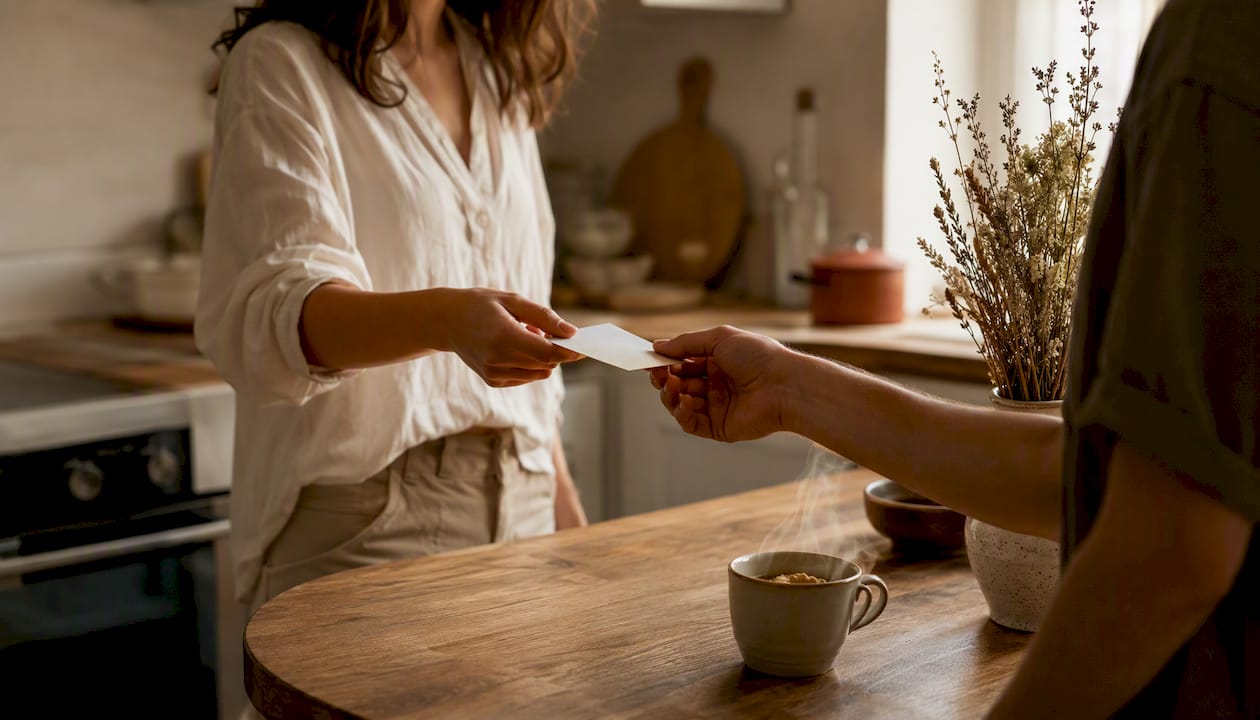
Small Acts of Kindness: Why They Matter More Than You Think
Small acts of kindness matter because they reliably improve emotional well-being, reduce stress hormones, strengthen social ties, and produce measurable physiological benefits for both the person giving and the person receiving. A neighbor who holds the elevator, a coworker who leaves a note of thanks on a colleague’s desk, a partner who sends a quick “thinking of you” text in the middle of a busy afternoon: each of these takes under a minute and each triggers real neurochemical change. Research from Jim Coan at the University of Virginia and large-scale public-health reviews back this up with specifics, not just sentiment.
Here is what the evidence points to, at a glance:
- Mood and stress: Kindness boosts serotonin, dopamine, and endorphins while lowering cortisol, the body’s primary stress hormone.
- Social connection: Even brief, low-stakes gestures strengthen what researchers call “weak ties,” the casual bonds that hold communities together.
- Physical health: The Big Joy Project found modest improvements in sleep and physical health after just one week of daily micro acts.
- Reciprocal effect: Givers consistently underestimate how good their act makes the recipient feel, which means the impact is almost always larger than it looks from the outside.
Key Takeaways
Small acts of kindness produce real, measurable benefits for givers and receivers alike, and the impact is almost always larger than the giver expects.
| Point | Details |
|---|---|
| Kindness changes brain chemistry | Kind acts raise serotonin, dopamine, and endorphins while lowering cortisol, producing a genuine physiological shift. |
| Givers underestimate impact | Research shows recipients feel more warmth and gratitude than givers predict, so hesitation is usually unfounded. |
| One week is enough to see results | The Big Joy Project found modest improvements in sleep and physical health after just one week of daily micro acts. |
| Habit stacking makes it stick | Attaching one kind act to an existing daily routine removes willpower from the equation and builds a lasting practice. |
| Pingher sustains daily kindness | Pingher’s reminders and one-tap messaging help couples maintain consistent appreciation without adding friction to a busy day. |
Table of Contents
- What counts as a small act of kindness?
- What does the research actually show about kindness?
- How do small acts scale into community-level change?
- Concrete small acts you can try today
- How to make kindness a daily habit
- When kindness can backfire: boundaries and cautions
- How volunteering differs from microkindness, and where to start
- What one small act actually looks like in practice
- Pingher helps you keep the habit going
- Sources
What counts as a small act of kindness?
“Small act of kindness” is a broad phrase, so it helps to pin it down. The working definition used across most research is a low-cost, low-effort, interpersonal gesture made with the intent to benefit someone else. It does not require money, planning, or a special occasion.
Researchers and practitioners use a few overlapping terms:
- Random acts of kindness: Unplanned gestures toward strangers or acquaintances, like paying for the coffee behind you in line or picking up something someone dropped.
- Microkindnesses: Tiny, habitual behaviors within existing relationships, a smile, a genuine compliment, a quick check-in text. Jim Coan and other researchers describe these as bids for connection that strengthen the social fabric one thread at a time.
- Daily rituals: Consistent, scheduled gestures within close relationships, saying “I love you” before leaving the house, or texting a partner mid-day just to say you are thinking of them.
- Self-kindness: Treating yourself with the same patience and care you would offer a good friend, resting when you are tired, speaking to yourself without harsh judgment.
The concept of weak ties is worth pausing on. Sociologists use the term to describe relationships that are not close friendships but are not strangers either: the barista you see every morning, the neighbor you wave to, the colleague in a different department. These connections turn out to matter enormously for community health and personal resilience. Microkindnesses are the primary currency of weak ties, and micro-connection in relationships works the same way inside a partnership.
What does the research actually show about kindness?
The evidence is more specific than most people expect. Three converging lines of research make the case.
Neurotransmitters and stress hormones
Kindness activates the brain’s reward circuitry. According to Mayo Clinic Health System, performing kind acts raises serotonin (which stabilizes mood), dopamine (which drives motivation and pleasure), and endorphins (the body’s natural pain relievers), while simultaneously lowering cortisol. That is a meaningful physiological shift from a gesture that might take thirty seconds.

Neuroscience adds another layer. Psychology Today explains that repeated kindness trains neural pathways toward patience and emotional regulation, while repeated hostility deepens the grooves for anger. The brain is literally shaped by which habits you practice more often.
Named researchers and key studies
Jim Coan (University of Virginia) has spent years studying social baseline theory, the idea that humans are wired to function best in connection with others. His work shows that saying hello or thank you, the most ordinary daily kindnesses, supports social connection and corresponds to healthier individuals and communities.
Tyler J. VanderWeele (Harvard) and Tim Lomas (also Harvard) have both contributed to the public-health framing of kindness, arguing that prosocial behavior is not just a personal virtue but a population-level health resource. A review published in Nature Communications makes the case that kindness can be integrated as a cost-effective, equitable public-health strategy to improve wellbeing at scale.
The Big Joy Project produced some of the most concrete numbers. Across a large number of participants, a period of short daily micro acts led to higher emotional wellbeing, more positive emotions, and modest improvements in sleep and physical health.
That finding from the Journal of Experimental Psychology is worth sitting with. You almost certainly underestimate how much your kind acts land. The recipient feels more warmth, more seen, and more grateful than you imagine.
The Mental Health Foundation synthesizes this evidence clearly: acts of kindness reduce stress, improve mood, raise self-esteem, and strengthen social networks, for both giver and receiver.
How do small acts scale into community-level change?
Individual microkindnesses do not stay individual for long. Kindness is contagious in a documented, measurable way: when someone witnesses or receives a kind act, they are more likely to perform one themselves. A stranger who helps you carry a stroller up subway stairs makes you more likely to hold a door for someone else an hour later. This is sometimes called “upstream reciprocity” or the “pay it forward” effect, and it means a single act can ripple through a social network well beyond the original two people.
At the community level, the effects accumulate into something researchers describe as civic trust: the general sense that strangers are basically decent and that the social environment is safe. Higher civic trust correlates with lower rates of loneliness, more neighborliness, and better collective responses to shared problems.
Public-health researchers now argue that kindness belongs in policy and clinical frameworks precisely because it is low-cost and scalable. A community where microkindnesses are normal is a community with lower baseline stress.
| Finding | Detail | Source |
|---|---|---|
| Big Joy Project sample | ~17,598 participants; one week of micro acts improved emotional wellbeing and sleep | Scientific American |
| Neural pathway change | Repeated kindness builds patience; repeated hostility deepens anger grooves | Psychology Today |
| Giver underestimation | Givers consistently underrate recipients’ positive reactions, limiting prosocial frequency | Journal of Experimental Psychology |
| Mental health outcomes | Kindness linked to reduced stress, improved mood, higher self-esteem | Mental Health Foundation |
Concrete small acts you can try today
The list below is deliberately specific. These are not categories; they are actions you can copy word for word.
At home
- Leave a handwritten note somewhere your partner will find it (coffee maker, bathroom mirror, inside a shoe).
- Text your partner one specific thing you appreciate about them before noon, not a generic “love you” but something concrete: “I noticed you handled that call this morning really well.”
- Make the coffee without being asked, or refill their water glass when you refill yours.
- Ask “How are you actually doing?” and wait for a real answer instead of a reflexive “fine.”
At work
- Send a short Slack or email message to a colleague naming something they did well this week.
- Bring an extra snack to share without making it a big deal.
- When someone looks stressed, ask if there is one thing you can take off their plate.
- Acknowledge a junior team member’s contribution in a meeting where they might otherwise go unnoticed.
In public
- Make eye contact and smile at the cashier or barista, and use their name if you can see it on a name tag.
- Let someone merge in traffic without the performative sigh.
- Hold the door for the person behind you and make brief, genuine eye contact while doing it.
- If you see someone struggling with directions, offer to help before they ask.
Self-kindness
- Take a ten-minute break without guilt when you feel your concentration slipping.
- Speak to yourself after a mistake the way you would speak to a close friend: “That was hard. What can I learn?”
- Schedule one thing this week that is purely for your own enjoyment, not productivity.
Pro Tip: The most memorable kind acts are specific. “You did a great job” lands softer than “The way you explained that problem in the meeting made it click for everyone.” Specificity signals that you were actually paying attention, and that is the real gift. For partners especially, thoughtful, specific messages consistently outperform generic ones.
Research from the Journal of Experimental Psychology confirms that givers underestimate how positively recipients feel, so when you hesitate because “it probably won’t mean much,” the data says you are wrong. Do it anyway.
How to make kindness a daily habit
One-off acts feel good. A practice changes you. The goal here is to build kindness into your existing routine so it requires no willpower.
- Pick one anchor habit. Choose something you already do every day without thinking: making coffee, brushing your teeth, sitting down at your desk. That is your trigger.
- Stack one kind act onto it. “After I pour my morning coffee, I will send one specific appreciation message to my partner.” That is a complete habit stack. Low-friction love gestures work precisely because they attach to existing behavior.
- Days 1–3: Focus only on your partner or closest person. One message, one note, one verbal acknowledgment per day. Keep it small enough that skipping feels stranger than doing it.
- Days 4–7: Expand to one person outside your home. A coworker, a friend, a neighbor. Same rule: one specific, low-effort act per day.
- Days 8–10: Add a public-facing act. Hold a door, compliment a stranger’s work, tip a little more generously.
- Days 11–14: Review. Which acts felt natural? Which felt forced? Drop the forced ones and double down on the natural ones. Habit design research consistently shows that acts that fit your personality and schedule are the ones that stick.
- Set a reminder. A phone alarm labeled “one kind thing” at 9 AM takes three seconds to set and removes the cognitive load of remembering. Apps like Pingher do this automatically for relationship-focused acts.
The Psychology Today neuroscience piece frames this well: every time you choose patience over irritation, you are literally reinforcing a neural pathway. The habit is not just behavioral; it is structural.
When kindness can backfire: boundaries and cautions
Kindness without boundaries is not kindness; it is a slow drain. A few red flags worth watching:
- Resentment is building. If you feel quietly angry after doing something “nice,” that is a signal the act was not freely given. Obligated kindness benefits no one.
- Your help is enabling. Covering for a friend who repeatedly misses commitments, or softening consequences for someone whose behavior is harmful, is not kindness to them. It removes the feedback they need.
- The recipient did not want it. Unsolicited help, especially physical help or advice, can feel patronizing. Consent matters. Ask before you act when the situation is ambiguous.
- You are running on empty. Chronic over-giving without self-replenishment leads to burnout. The self-kindness category in the previous section is not optional; it is what makes sustained kindness possible.
A quick three-check decision rule before acting:
- Consent: Would this person welcome this gesture, or am I assuming?
- Cost to me: Can I do this without resentment, even if they never acknowledge it?
- Likely benefit: Does this actually help them, or does it help me feel useful?
Cultural context matters too. What reads as warm and friendly in one setting (a spontaneous hug, a direct compliment on appearance) can feel intrusive in another. When in doubt, err toward verbal and explicit rather than physical and assumed.
How volunteering differs from microkindness, and where to start
Microkindnesses are the daily texture of a kind life. Volunteering is the architecture. They are complementary, not competing.
Volunteering tends to fall into three categories:
- Time-limited events: A single Saturday at a food bank, a neighborhood cleanup, a charity walk. Low commitment, high visibility, good entry point.
- Recurring commitments: Weekly tutoring, monthly mentorship calls, regular shifts at a shelter. These build deeper relationships and tend to produce stronger wellbeing benefits for the volunteer.
- Remote and skills-based: Writing grant proposals for nonprofits, designing materials, providing pro bono professional advice. Useful if your schedule or mobility limits in-person options.
Pro Tip: Match your commitment level to your actual capacity, not your aspirational capacity. A monthly two-hour shift you keep is worth more than a weekly commitment you abandon after three weeks. Action for Happiness offers structured campaigns and day-by-day action ideas that make it easy to start at whatever level fits your life.
Entry points worth knowing:
- Local community centers and libraries often post volunteer needs on their bulletin boards and websites.
- Neighborhood apps and local Facebook groups frequently surface one-time help requests.
- VolunteerMatch and Idealist list remote and in-person opportunities by zip code.
- HelpGuide’s random acts of kindness resource includes a practical starter list for people who want to begin before they find a formal program.
What one small act actually looks like in practice
A few months ago, a friend mentioned offhand that she had been struggling with a project at work and felt invisible to her team. The next morning, someone on that team sent her a two-line email: “I saw how much work you put into that deck. It showed.” She described it later as one of the best moments of her week.

Two sentences. No grand gesture. The sender probably spent forty-five seconds writing it and then forgot about it. She thought about it for days.
That is the gap the Journal of Experimental Psychology documents: givers underestimate, receivers feel it deeply. The research on daily affection signals in relationships shows the same pattern. You do not need to wait for the right moment or the right words. One specific, genuine sentence, sent today, is enough to start.
Pingher helps you keep the habit going
The hardest part of daily microkindness in a relationship is not the intention; it is the friction. Life gets busy, and “I’ll send that message later” becomes never.
Pingher is built for exactly that gap. The app gives couples one-tap access to personalized message templates, AI-assisted suggestions, and scheduled reminders so that expressing appreciation takes seconds, not mental energy. You set the rhythm once, and Pingher keeps it going: a morning reminder, a mid-day prompt, a note that arrives when your partner needs it most. It complements the in-person acts covered in this article rather than replacing them. A text that says “I noticed you this morning” lands differently when your partner also got a hug before you left. Together, they build the kind of daily emotional connection that research consistently links to stronger, more resilient relationships. Download Pingher at Pingher and send your first message today.
Sources
These sources are worth bookmarking if you want to go deeper on any of the research cited above.
- Why being nice matters in a complex world — University of Virginia News
- How Small, Easy Acts of Joy Improve Happiness and Well-Being — Scientific American
- The Neuroscience of Everyday Kindness — Psychology Today
This article is general information, not a substitute for advice from a qualified doctor. Consult a qualified healthcare professional about your own circumstances before acting on anything here.
Recommended
Built for couples who care.
Pingher helps you send the right words at the right moment.
Get Pingher on Google Play