Two Solos + 10 Minute Ritual Beats Shared Relationship Trackers

Two Solos + 10 Minute Ritual Beats Shared Relationship Trackers
For most couples, the best relationship habit tracker isn’t one shared app. It’s two solo trackers plus a 10-minute weekly ritual. That setup protects psychological safety and actually holds up over months, not just the first excited week. Pingher fits naturally here, too, sending daily affectionate nudges and reminders that keep the small stuff from slipping.
TL;DR:
- Using two solo trackers with a weekly 10-minute ritual is more sustainable and less prone to fostering resentment than a shared app.
- Shared trackers often lead to competition and defensiveness, especially if one partner feels judged or too monitored.
- Limiting shared tracking to one or two habits and keeping emotional notes private prevents it from feeling punitive or invasive.
- The weekly ritual should focus on celebrating small wins, sharing feelings about the habits, and setting one priority for the next week, rather than tracking perfection.
- Keeping the habit list short, such as a daily good morning message and a weekly date, is more effective than trying to track many behaviors poorly over time.
Table of Contents
- Which Relationship Habit Tracker Pattern Fits You?
- Why Shared Trackers Often Backfire
- How to Run Each Pattern Day to Day
- The 10-Minute Weekly Ritual That Makes It Stick
- What Relationship Habits Are Worth Tracking?
- What the Research Actually Says About Rituals
- What Most Advice Gets Wrong About Habit Tracking
- How Pingher Fits Into Your Weekly Ritual
- Sources
- FAQ
Which Relationship Habit Tracker Pattern Fits You?
Most couples land on one of two setups when they start tracking habits together.
Pattern A: the shared tracker. Both partners log into the same app or spreadsheet, check off the same habits, and see each other’s progress in real time. It works well for short-term, high-motivation stretches, like a 30-day challenge to text each other good morning every day, or a joint push before a big trip.
Pattern B: two solo trackers plus a weekly ritual. Each partner tracks privately in their own way, whether that’s a notes app, a journal, or Pingher’s daily reminders, then you both sit down once a week to talk through it together. This is usually the sturdier option because it doesn’t depend on both people having the same schedule, mood, or tolerance for being watched.
Use this quick checklist to decide:
- If you both thrive on visible progress and neither of you minds being seen struggling, try Pattern A.
- If one of you travels more, works irregular hours, or tends to feel judged by numbers, go with Pattern B.
- If you’re not sure, start with Pattern B. It’s easier to downgrade to solo tracking than to repair trust after a shared tracker backfires.
Why Shared Trackers Often Backfire
A shared tracker sounds like teamwork. In practice, it can quietly turn into supervision. When one partner opens the app and sees three missed check-ins next to their name, that’s not encouragement anymore. That’s a scoreboard, and scoreboards make people defensive.
The mismatch usually shows up in motivation. One partner treats the tracker like a game. The other treats it like a test they’re about to fail. That gap creates resentment fast, especially if one person checks the app daily and the other opens it once a week feeling behind.
A few guardrails keep shared tracking from turning punitive:
- Limit what’s visible to just one or two habits, never a full dashboard of everything.
- Agree out loud that missed days get a shrug, not a comment.
- Keep anything emotionally loaded (mood, intimacy, conflict notes) in a private log, not a shared feed.
Pro Tip: If you notice either of you checking the app to “catch” the other person slipping, that’s the signal to switch to private tracking immediately. Don’t wait for a fight about it.
How to Run Each Pattern Day to Day
Once you’ve picked a pattern, the daily mechanics matter more than the app you use.
- Pattern A, kept light. Stick to one or two joint habits, like a daily check-in text or a shared “did we eat dinner together” toggle. Skip streaks and badges. The goal is a gentle nudge, not gamification.
- Pattern B, personal logging. Each partner notes their own habits privately. Once a week, you compare notes out loud instead of through the app, which is where the actual bonding happens.
- Delegate confirmations. If one partner is swamped with work or a new baby, let the other mark “we did it” for both when it’s obviously true. Nobody needs to log a shared coffee twice.
- Default to no shame. Missed a day? Note it and move on. The point of a couples habit tracker is momentum, not a perfect record.
The busier partner rarely opens the app daily, and that’s fine. What breaks a relationship habit tracker isn’t inconsistency. It’s turning inconsistency into a grievance.
The 10-Minute Weekly Ritual That Makes It Stick
This is where a daily relationship tracker actually pays off, in one short conversation a week.
- Minute 1 to 2, celebrate. Name one thing that went well, no matter how small. “I loved that you texted me during your lunch break on Tuesday.”
- Minute 3 to 5, report. Quickly share what you tracked, out loud or by glancing at your own log. Keep it factual, not evaluative.
- Minute 6 to 8, share meaning. Ask each other: “Did this make us feel more connected?” and “What would make it easier next week?” This is the step most couples skip, and it’s the one that turns a checklist into a relationship ritual.
- Minute 9 to 10, pick one focus. Choose a single habit to prioritize for the next seven days. Not five. One.
Skip the script that sounds like a performance review. Try: “What felt good this week?” instead of “Did you complete your habits?”
Pro Tip: Judge the ritual by whether it felt meaningful, not by how many boxes got checked. A week with two missed habits and one honest conversation beats a perfect streak with no real talk.
What Relationship Habits Are Worth Tracking?
Keep your list short. Two or three habits, tracked well, beat ten habits abandoned by Thursday.
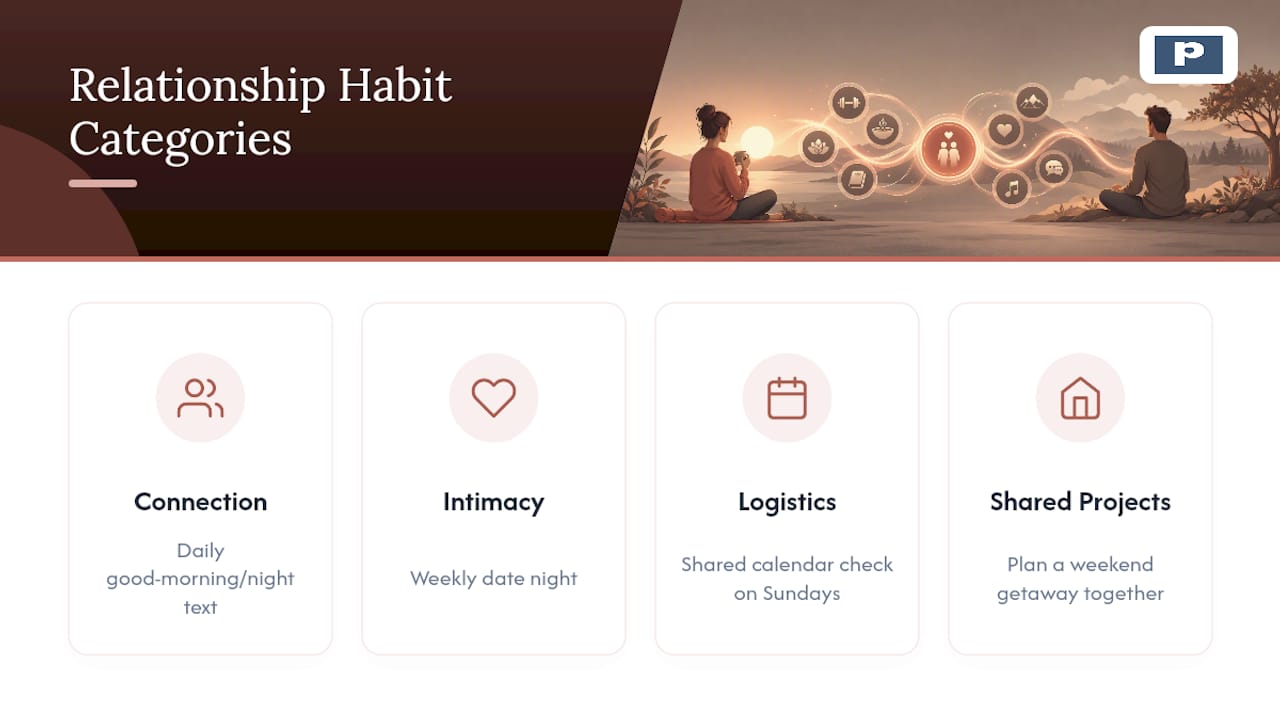
Connection: a daily good morning or good night text, a five-minute check-in on the drive home, one compliment a day.
Intimacy: a weekly date night, holding hands during a shared task, a private note left somewhere unexpected.
Logistics: splitting the mental load of planning dinner, a shared calendar check on Sundays, one household task swapped weekly.
Shared projects: a home improvement task, planning a weekend getaway together, saving toward a joint goal.
Give the habit a name that means something to you both. “Sunday reset” lands differently than “chore check-in,” and that small relationship intentionality shift is often what makes a habit stick past week two.
What the Research Actually Says About Rituals
Research from Harvard Business School found couples who agreed they shared a relationship ritual reported higher satisfaction than couples who disagreed on whether one existed. The catch: the ritual has to carry shared symbolic meaning, not just repetition. Checking a box means nothing if only one partner understands why it matters.
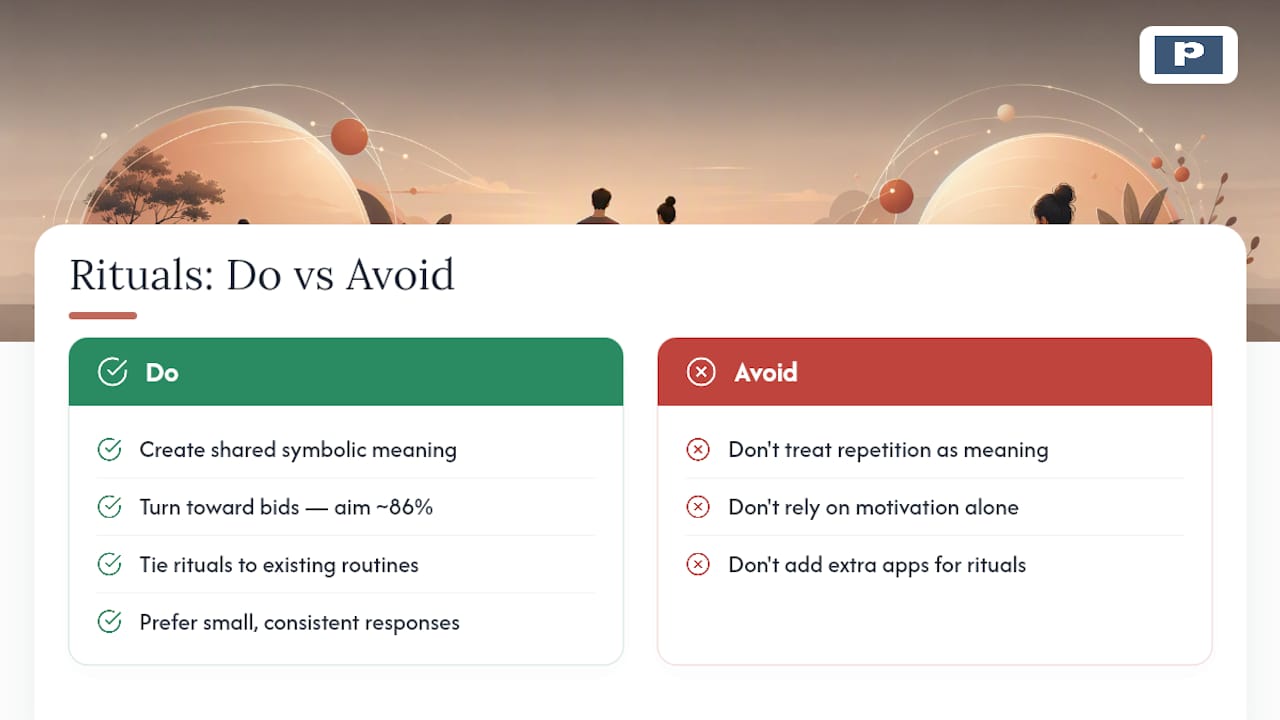
The Gottman Institute’s research on emotional “bids” backs this up. Couples who stayed together turned toward each other’s bids for connection roughly 86% of the time, compared to 33% among couples who later divorced. Small, consistent responses outweigh grand gestures.
On the habit side, a randomized trial on cue planning found that tying a habit to an existing routine, like breakfast or bedtime, builds automaticity faster than relying on motivation alone.
Rituals only work when both people agree on what they mean. A shared coffee is just caffeine until you both call it “our thing.”
Pingher builds on this with daily affection reminders and one-tap messages designed to fit into a routine you already have, not add another app to check.
What Most Advice Gets Wrong About Habit Tracking
Most habit tracker advice for couples borrows straight from productivity culture: streaks, dashboards, shared visibility. That works for gym habits. It works far less well for relationships, where being watched and being loved can start to feel like opposites.
The research points somewhere quieter. Rituals matter because of the meaning attached, not the completion rate. A relationship goals planner that only counts checkmarks misses the actual mechanism: small, repeated bids for connection, noticed and answered.
If there’s one thing to prioritize, it’s the weekly conversation over the daily log. Couples who talk about why a habit matters build something closer to a ritual. Couples who only track whether it happened build a chore list. Pingher’s approach, quiet daily nudges instead of a scoreboard, fits the first model, not the second, and that’s a deliberate design choice worth noticing.
— Alan
How Pingher Fits Into Your Weekly Ritual
Some apps are designed to keep the daily side of relationship habits running without turning your relationship into a project to manage, aiming to reduce the mental overhead of remembering everything yourself.

The one-tap AI messages handle the small daily touch, a good morning text with real warmth instead of a copy-paste line, while scheduled reminders make sure important dates never sneak up on you. The app is ad-free and private, which matters if the whole point of your tracking system is to avoid anything that feels like surveillance. There’s no dashboard shaming you for a missed day, just quiet nudges and curated ideas, from gifts she’ll want to a weekend getaway worth planning.
You can explore dedicated apps on Google Play that assist in setting up reminders and message templates to help handle daily relationship habits while focusing on meaningful weekly rituals.
Sources
- Garcia‑Rada, Sezer & Norton — Relationship rituals and satisfaction (HBS research)
- Gottman Institute — Turn toward instead of away
- Keller et al. — Cue planning and habit automaticity (2021 randomized trial)
FAQ
What Is a Relationship Habit Tracker?
A relationship habit tracker is a tool, app, or simple log couples use to build consistency around small connective actions, like daily check-ins or weekly date nights. The strongest versions pair tracking with a short weekly conversation about what the habit actually means, not just whether it happened.
Should Couples Use One Shared App or Two Separate Trackers?
Two separate trackers plus a shared weekly ritual usually works better than one joint app. It avoids the policing effect that shared visibility can create, especially when partners have different schedules or motivation levels.
How Often Should Couples Review Their Tracked Habits?
Once a week is enough for most couples. A short, ten-minute conversation that covers wins, meaning, and one focus for the next week beats daily check-ins that turn into pressure.
Can Pingher Replace a Habit Tracker for Couples?
Pingher isn’t a spreadsheet-style tracker, but it supports the same goal through daily affectionate reminders, one-tap messages, and scheduled nudges for important dates. Pricing details are available directly on Pingher’s site.
What Habits Should We Track First?
Start with two or three habits across connection and logistics, like a daily good morning text and a Sunday planning check-in. Keep the list short so it survives past the first few weeks.
Recommended
Built for couples who care.
Pingher helps you send the right words at the right moment.
Get Pingher on Google Play