10 to 15 Minutes to a Real Love Note for Busy Men
10 to 15 Minutes to a Real Love Note for Busy Men
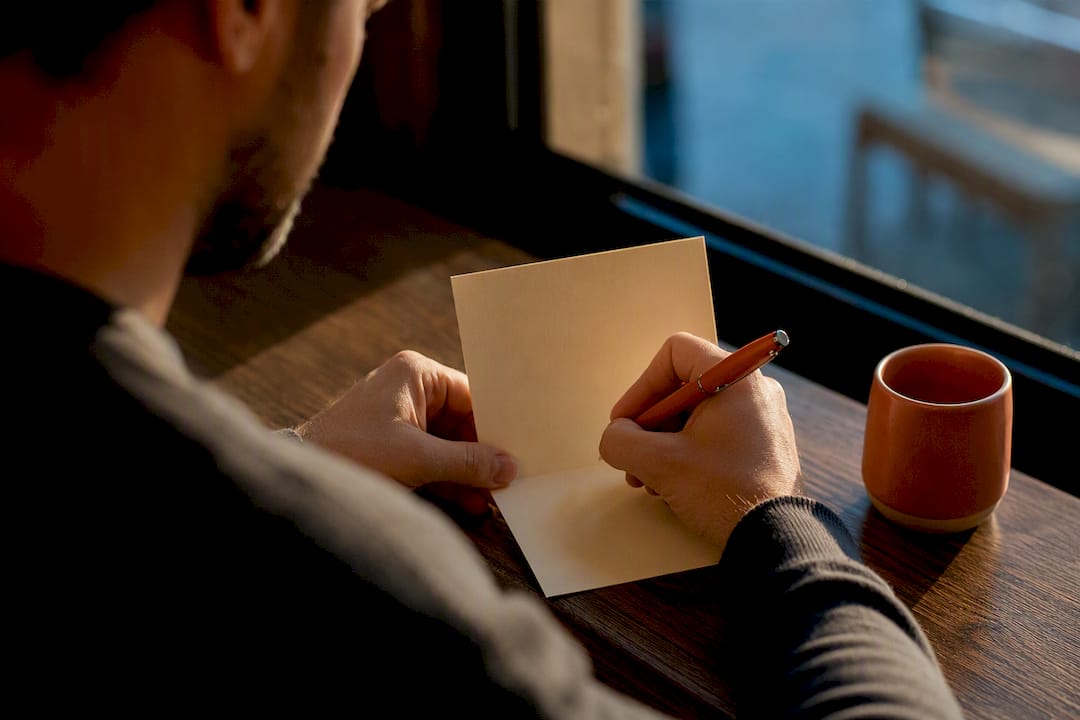
Write a short, specific note: a warm salutation, one personal memory or quality, a forward-looking or reaffirming line, and a sincere closing. Handwrite it for a special occasion, or send it digitally when you’re short on time. Give yourself 10 to 15 minutes, and you’ll have something real, not generic.
TL;DR:
- Specific details about your partner’s habits, memories, or qualities make love notes more meaningful and less interchangeable.
- Handwritten notes are best reserved for significant occasions, while digital messages promote regular daily connection.
- Short, structured notes that take 10 to 15 minutes to write and focus on one to three personal details are highly effective.
- Consistency in sending frequent, authentic messages outweighs reliance on grand gestures or exceptional prose.
- Using tools like scheduled templates and reminders can help maintain a steady habit of thoughtful, personalized love notes.
Table of Contents
- Why Short, Specific Love Notes Beat Long, Vague Ones
- A 10 to 15 Minute Method for Writing a Love Note
- Prompts and Ready-to-Use Love Note Examples by Occasion
- How to Keep a Love Note Sincere Instead of Sappy
- Getting the Delivery Right: Stationery, Timing, and Small Touches
- How Busy Couples Turn Love Notes Into a Habit
- Why Consistency Beats Spectacle in Every Love Note
- Let Pingher Help You Keep the Habit Going
- Sources
- FAQ
Why Short, Specific Love Notes Beat Long, Vague Ones
A love note works when it could only have been written about one person. That’s the whole secret. The moment a reader senses they could swap in anyone else’s name, the note loses its weight.
Specificity is what separates a real love note from a greeting card. Mentioning the way she laughs at her own jokes before anyone else does, or the exact diner booth where you had your third date, tells your partner you were paying attention. Generic lines like “you mean the world to me” feel nice for about three seconds. A detail she can picture sticks for weeks.
That’s also where the handwritten versus digital decision comes in, and it’s less about romance versus convenience than most people assume.
- Handwritten notes carry more weight for milestone moments (anniversaries, apologies, “just because I love you” surprises) because the physical effort itself reads as a signal of care.
- Digital or scheduled notes win on frequency. A quick, specific message sent on a Tuesday afternoon beats silence every time.
- The mix matters more than the medium. Couples who send small notes often, and save handwritten ones for bigger moments, report feeling more connected than those who wait for perfect occasions.
Here’s the part that surprises most people: research on digital communication in relationships suggests consistent, specific messages sent daily can carry as much relationship value as rare, grand gestures. A three-line text that names something real tends to outperform a once-a-year bouquet in terms of how loved your partner actually feels, day to day.
That finding should take the pressure off. You don’t need a poem. You need a habit of noticing things and saying them out loud, or in writing, on a regular basis.
A 10 to 15 Minute Method for Writing a Love Note
You don’t need to be a writer to write a love letter that lands. You need a structure, a timer, and permission to keep it short.
Here’s the micro-structure that works across occasions, adapted from the same approach romance novelists recommend when asked how they’d write one themselves:
- Greeting (3 to 5 words). Skip “Dear” if it feels stiff. Try a nickname, an inside joke, or just their first name with an exclamation point.
- Opening sentence (state your purpose). One line that tells them why you’re writing. “I was thinking about you on my drive home” is enough.
- One to three specific examples or memories. This is the engine of the note. Name a moment, a habit, or a quality you love, and be precise about it.
- A short future or supportive line. One sentence that looks forward, not just back. This is what separates a love note from a thank-you note.
- Heartfelt closing and sign-off. Keep it simple. “Yours,” “Always,” or just your name works fine.
Now the timed workflow. Experts who study love letters generally recommend setting aside 10 to 15 minutes to gather your thoughts before writing, and that window breaks down cleanly:
Minutes 1 to 3: Brainstorm. Grab your phone or a scrap of paper and jot down three things: a recent memory, a quality you admire, and one word for how you feel right now. Don’t edit yet.
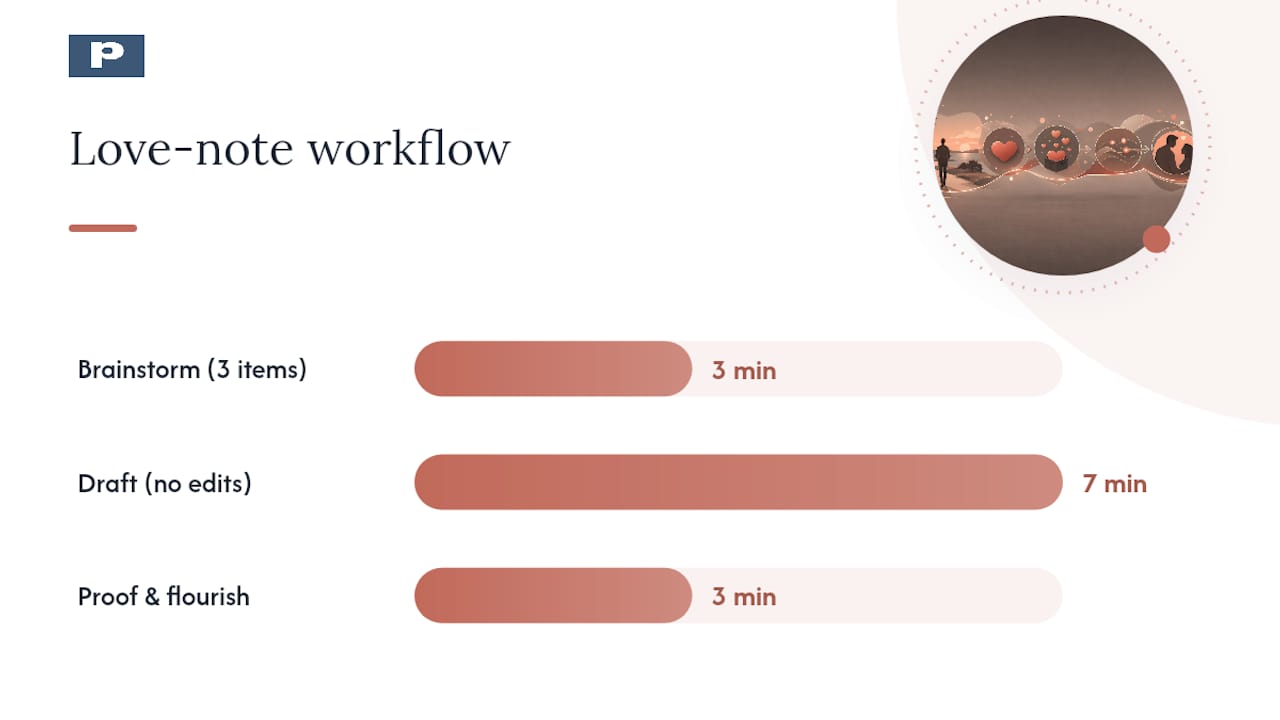
Minutes 4 to 10 (roughly 7 minutes): Draft. Write the note straight through using the structure above. Don’t stop to fix wording. Momentum matters more than polish here.
Minutes 11 to 13: Proofread and add a flourish. Read it once out loud. Cut anything that sounds like it came from a card aisle. Add one small personal touch, a doodle, an inside joke, a P.S.
Some opening lines worth borrowing and adapting:
- “I don’t tell you enough that…”
- “I was folding laundry and thought of the time you…”
- “Something small happened today that made me miss you…”
And closings that avoid the generic “love you” fade-out:
- “Still choosing you. Every time.”
- “More grateful for you than I let on.”
- “Yours, on purpose.”
Pro Tip: Write the middle first if you get stuck on the greeting. The hardest part of any love note is the first line, so skip it, write your specific memory or detail, then circle back to open the note once you know what it’s actually about.
Prompts and Ready-to-Use Love Note Examples by Occasion
Organizing notes by occasion removes the blank-page problem entirely. Grouping prompts this way helps you match tone to moment instead of guessing.
Each example below includes a [swap-in detail] placeholder. Fill it with something true, and the note stops sounding like a template.
Just because
- “Thinking about
[a moment from this morning]and smiling like an idiot at my desk.” - “No occasion. Just wanted you to know
[specific quality]still gets me, every time.” - “Saw
[a random object]today and it made me think of you. That’s it. That’s the note.”
Miss you
- “The apartment is too quiet without
[a specific sound or habit they have].” - “Counting down until
[specific date or event]when I get you back.” - “Missing
[specific physical detail, like their laugh or the way they steal the blanket]tonight.”
Appreciation
- “Thank you for
[specific action they did recently]. I don’t say it enough, but I noticed.” - “You handled
[a recent stressful situation]with more grace than I could have. I’m grateful.” - “Every day you
[specific recurring kindness], and I don’t want that to go unnoticed.”
Anniversary
- “It’s been
[number]years since[specific memory from that day], and I’d choose it again without hesitating.” - “Still my favorite decision, every single year.”
- “Remember
[a specific detail from your first date or wedding]? I think about that a lot.”
New love
- “I keep thinking about
[specific recent moment]and grinning like it’s a secret.” - “Not sure what this is yet, but
[specific quality]about you is impossible to ignore.” - “You said
[something they said recently]and I haven’t stopped thinking about it.”
Apology
- “I got
[specific behavior]wrong, and you deserved better. I’m sorry.” - “Still thinking about how
[specific incident]went, and I want to do better next time.” - “No excuse for
[specific action]. Just sorry, and grateful you’re patient with me.”
Playful or cheeky
- “Warning: this note contains zero chill about how much I like you.”
- “Reminder that you owe me
[a fun, low-stakes debt, like a rematch or a coffee].” - “Filed under: reasons I’m keeping you
[specific funny reason].”
If none of these feel right, ask yourself three quick questions before writing your own line: What’s one thing they did this week that I noticed? What’s a detail about them that a stranger wouldn’t know? What do I want them to feel three hours from now when they reread this? Answer any one of those honestly, and you’ll have a sentence better than most of the templates above. For more full-length examples built around real scenarios, Pingher’s library of digital love notes has additional adaptable formats worth browsing.
How to Keep a Love Note Sincere Instead of Sappy
Clichés kill love notes faster than bad handwriting. The fix isn’t more emotion. It’s more precision.
Here’s the PG-13 rule worth knowing: how much sensual detail belongs in a note depends entirely on relationship stage and where it might be read. A private, handwritten letter left under a pillow can go further than a note tucked into a lunch bag or texted where a screen might be glanced at by a coworker. When in doubt, keep anything intimate for a setting where privacy is certain.
A few cliché-to-specific rewrites:
- Cliché: “You’re my everything.” → Specific: “You’re the reason I laugh at 11 p.m. when I should be asleep.”
- Cliché: “I love you so much.” → Specific: “I love how you narrate your cooking out loud even when no one’s listening.”
- Cliché: “You make me so happy.” → Specific: “Watching you get excited about something small, that’s my favorite part of any day.”
Watch for these red flags too:
- Overpromising. Don’t write “I’ll never make you feel that way again” if you can’t actually guarantee it. Sincerity beats grand vows every time.
- Passive-aggressive undertones. A love note isn’t the place for “I wish you’d notice more” disguised as affection. Save that for a real conversation.
- Heavy topics squeezed into a short note. Grief, big arguments, or relationship doubts deserve a real conversation, not three lines on a sticky note.
Pro Tip: If a line sounds like it could be printed on a mug, cut it. Replace it with something only you would know about your partner.
Getting the Delivery Right: Stationery, Timing, and Small Touches
The words matter most, but presentation decides whether the note gets read carefully or skimmed and tossed.
Match the stationery to the moment. A folded card or nice paper suits anniversaries and apologies. A sticky note works for everyday appreciation. A scheduled text fits the mornings when you’re already out the door before they wake up.
If your handwriting is rough, work around it, don’t fight it. Print instead of using cursive. Keep lines short so letters don’t cramp together. Use a pen you actually like writing with. None of that requires good penmanship, just a little more care in the setup.
Presentation choices boost how memorable a note feels. Small tokens, a pressed flower, a favorite sticker, a photo tucked behind the fold, signal effort even before your partner reads a word.
A few low-effort delivery ideas worth trying:
- Slip a folded note into their wallet where they’ll find it mid-day.
- Tape one to the bathroom mirror before you leave for work.
- Tuck a short line into their lunch bag or laptop sleeve.
- Schedule a digital note to land while you’re traveling for work, so distance doesn’t mean silence.
How Busy Couples Turn Love Notes Into a Habit
Most couples don’t fail at writing love notes because they lack the words. They fail because they never build a repeatable trigger for doing it.
A simple habit framework fixes that: trigger, then micro-action, then reward. The trigger might be your morning coffee, your commute, or the moment you lock your phone at night. The micro-action is one sentence, not a full letter. The reward is your partner’s reaction, a text back, a hug later, a small acknowledgment that closes the loop and makes you want to do it again tomorrow.
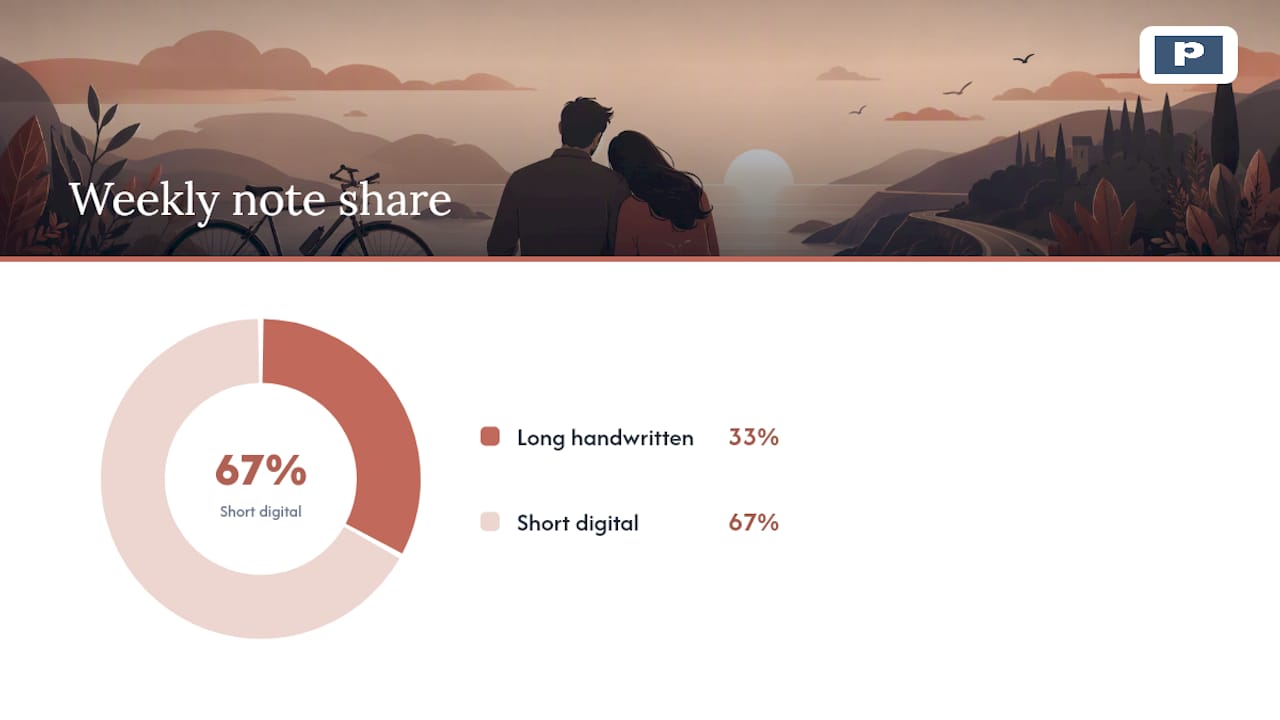
A workable weekly cadence looks like this:
- One longer, more detailed note (handwritten if possible) tied to a specific memory or milestone.
- Two short digital notes on ordinary days, sent without waiting for an occasion.
- Zero pressure to make every note profound. Frequency beats intensity here.
Tools built for exactly this rhythm can help. Pingher’s scheduling and template features exist for the days when the trigger fires but the words don’t come easily, letting you queue up a note in advance so the habit survives busy weeks instead of collapsing under them.
Why Consistency Beats Spectacle in Every Love Note
Most advice about love notes leans hard into the perfect line, the poetic phrase, the grand romantic gesture. I think that framing gets it backward. The couples who feel most connected aren’t the ones who write the best single letter of their lives once a year. They’re the ones who write something small and true on a regular basis, even when it’s just four sentences on a sticky note.
Convenience gets treated like the enemy of authenticity in a lot of relationship writing, and I don’t buy that. A scheduled note written on Sunday for a busy Wednesday isn’t less sincere just because it was planned ahead. What matters is whether the words are specific and true, not whether they were composed in a spontaneous burst of feeling. The real risk isn’t writing a note in advance. It’s writing the same vague note every single time.
— Alan
Let Pingher Help You Keep the Habit Going
Once you’ve got the structure down, the hard part isn’t writing one great note. It’s writing enough of them, often enough, without it turning into a chore. That’s where Pingher fits in. It’s a mobile app built around one idea: sending a thoughtful, personalized message to your partner should take one tap, not twenty minutes you don’t have on a Tuesday.
Pingher gives you AI-assisted suggestions, ready-to-adapt templates, and scheduling so your notes still land on the days you’re traveling, buried in work, or just running behind. It also tracks anniversaries and important dates so nothing slips past you. It’s built for men in long-term relationships who want to stay consistent without treating every message like a creative writing assignment. If the ten-minute method above already sounds like more than your week has room for, start with Pingher and see how a scheduled, personal message compares to writing one from scratch every time.
Sources
The structure and drafting advice in this piece draws on a handful of trusted sources.
- How do You Write the Perfect Love Letter? We Asked Romance Novelists — Good Housekeeping
- Communication
- 16 Cute Love Note Ideas That Are Far From Cheesy — Oprah Daily
FAQ
What do I write in a love note?
Open with a warm greeting, state why you’re writing in one sentence, then include one to three specific memories or qualities you love about your partner. Close with a short forward-looking line and a sincere sign-off.
What is the best note for love?
The best love note is short, specific, and impossible to mistake for anyone else’s relationship. A three-line note naming a real memory almost always beats a longer note full of general compliments.
How do you write love in a beautiful way?
Beautiful doesn’t mean poetic. It means precise: describe an exact moment, sound, or habit instead of reaching for a broad statement like “you’re amazing.” Specific language reads as more sincere than flowery language.
How do you make someone feel special with words?
Name something about them that only you would notice, a habit, a phrase they use, a memory from a random Tuesday. Feeling truly seen matters more than hearing elaborate compliments, and a tool like Pingher can help you keep that kind of detail flowing even on busy weeks.
Should a love note be handwritten or sent digitally?
Handwrite notes for milestones and moments where physical effort adds meaning. Use quick digital or scheduled notes for everyday consistency, especially during travel or busy stretches, since regular short messages can carry as much impact as rare grand gestures.
Recommended
Built for couples who care.
Pingher helps you send the right words at the right moment.
Get Pingher on Google Play