8 Surprise Weekend Ideas With Ready to Send Scripts for Busy Partners

8 Surprise Weekend Ideas With Ready to Send Scripts for Busy Partners
The fastest path to a surprise your partner remembers is a short, novel experience timed to their energy, not a complicated production. This guide gives you eight pull-off-able ideas, two planning timelines (48 to 72 hours or up to two weeks), ready-to-send message scripts, a packing checklist, and a few guardrails so the surprise lands the way you meant it to.
TL;DR:
- Surprises that match your partner’s energy levels and current stressors are more likely to be received with joy than those that push beyond their bandwidth.
- Booking activities and accommodations early, prepacking essentials, and scheduling messages in advance are crucial to ensure the surprise unfolds smoothly without last-minute chaos.
- Using timed, prewritten messages and an app to automate reveals prevents accidental spoilers and keeps the plan on track during busy or unpredictable days.
- Keep surprises simple, focused on shared experiences or low-effort gestures, as small, repeatable acts often result in stronger bonds than elaborate efforts.
- Always have a backup plan for weather, cancellations, or work conflicts and avoid surprises that involve major life decisions or large financial purchases.
Table of Contents
- Quick Shortlist: 8 Surprise Weekend Ideas That Busy Partners Can Pull Off
- Compact Planning Checklist: Step-by-Step for Busy Planners
- Prewritten Messages and Reveal Scripts, Timed to the Day
- Logistics and Packing for a Smooth Surprise Weekend
- How to Avoid a Surprise That Backfires
- Why Small, Repeatable Surprises Work Better Than Big Ones
- Schedule the Surprise, Not Just the Trip
- Sources
- FAQ
Quick Shortlist: 8 Surprise Weekend Ideas That Busy Partners Can Pull Off
You don’t need three weeks and a spreadsheet. You need one good idea, sized to the time you actually have. Research on relationship maintenance backs this up: even small, novel shared experiences strengthen bonds by giving couples a reason to lean on each other in something unfamiliar.
Here are eight that work on a real schedule:
- Hotel-night staycation. Book a room across town, dim the lights, order in. Zero travel risk, high novelty.
- Half-day road trip. Pick a town 45 minutes out, add one activity (a bakery, a lookout point, a bookstore), and you’re home before dinner.
- One class, one afternoon. Pottery, a cooking session, a dance lesson. Beginner activities work best because nobody has to perform, you’re both just figuring it out together.
- Outdoor micro-adventure. An easy hike or a guided kayak trip, capped with a picnic you packed the night before.
- Volunteer together. A few hours at a food bank or animal shelter. Shared purpose counts as a shared experience.
- Theme weekend at home. Build a playlist, order food from a country you’ve never tried, commit to the bit for one evening.
- Low-prep romantic package. Snacks, a playlist, a surprise picnic in the living room or a nearby park. This is the micro-surprise approach at its most efficient.
- Reveal-by-clues day. Drop small hints from morning to evening that build toward the real plan.
For a fuller version of the staycation idea, Pingher’s guide on a staycation that actually feels like a getaway walks through the small upgrades that make a home night feel like a hotel one.
Compact Planning Checklist: Step-by-Step for Busy Planners
You can select a planning timeline that fits the time you have available and follow the corresponding steps.
A last-minute timeline can cover a few days before the event.
- Choose one experience from the shortlist above and confirm it’s realistic for the day you have.
- Lock the booking (restaurant, class, room, or rental) the same day you decide.
- Build a quick essentials kit: overnight bag, chargers, any medication, a backup outfit.
- Schedule your messages (see the templates below) so they go out at the right moments without you having to remember.
- Confirm logistics the night before: parking, check-in time, weather.
A short-term planning timeline can cover about one to two weeks of preparation.
- Research one central activity and read reviews before booking.
- Reserve accommodation or a class slot, and pre-pay if the option exists, since paid bookings are harder to cancel on a whim.
- Block your own calendar and quietly check theirs for conflicts.
- Draft a clue timeline so hints land across the day instead of all at once.
- Do a final logistics pass 24 hours out.
Whichever timeline you use, weigh three things before you commit: your partner’s current energy (are they exhausted from a hard week?), any dietary or allergy limits, and outstanding work or childcare conflicts that could sink the plan. A study of relational surprise experiences found that surprises which ignore a partner’s actual bandwidth tend to land as intrusive rather than delightful, even when the intention is good.
Pro Tip: Put a calendar hold on the exact departure window the moment you decide, even before you’ve booked anything. A tentative hold is easier to protect from double-booking than a plan that only lives in your head.
For scheduling shortcuts, one calendar hold plus a single app or draft folder for your reveal messages beats juggling texts, notes, and reminders across three different tools. If you’re confirming a booking by phone, keep the script simple: name, date, party of two, and a request for a quiet table or an early check-in.
Prewritten Messages and Reveal Scripts, Timed to the Day
The messages matter almost as much as the plan itself. Send the wrong hint at the wrong hour and you’ve spoiled a weekend you spent days arranging.
Morning (commute or coffee):
- “Pack a bag for tomorrow night. That’s all you get for now.”
- “Something’s happening this weekend. You’ll like it. Trust me.”
Noon or early afternoon:
- Send a photo of a packed bag, a boarding pass, or a menu with no caption.
- A short voice note: “Just booked something. You’re going to want comfortable shoes.”
Evening buildup:
- “One more clue: it involves food you’ve never tried.”
- “Tomorrow, clear your afternoon. I mean it.”
The reveal, three ways:
- Low-key: “We’re going to [place]. I wanted a weekend that was just ours.”
- Playful: “Surprise! Bag’s already in the car. You’ve got ten minutes.”
- Grand: “I’ve been planning this for two weeks. We leave in an hour, and I’m not telling you anything else.”
Personalize any of these with a specific memory, an inside joke, or one sensory detail (a smell, a song, a food) that only means something to the two of you. That small edit is what turns a template into a message that actually sounds like you.
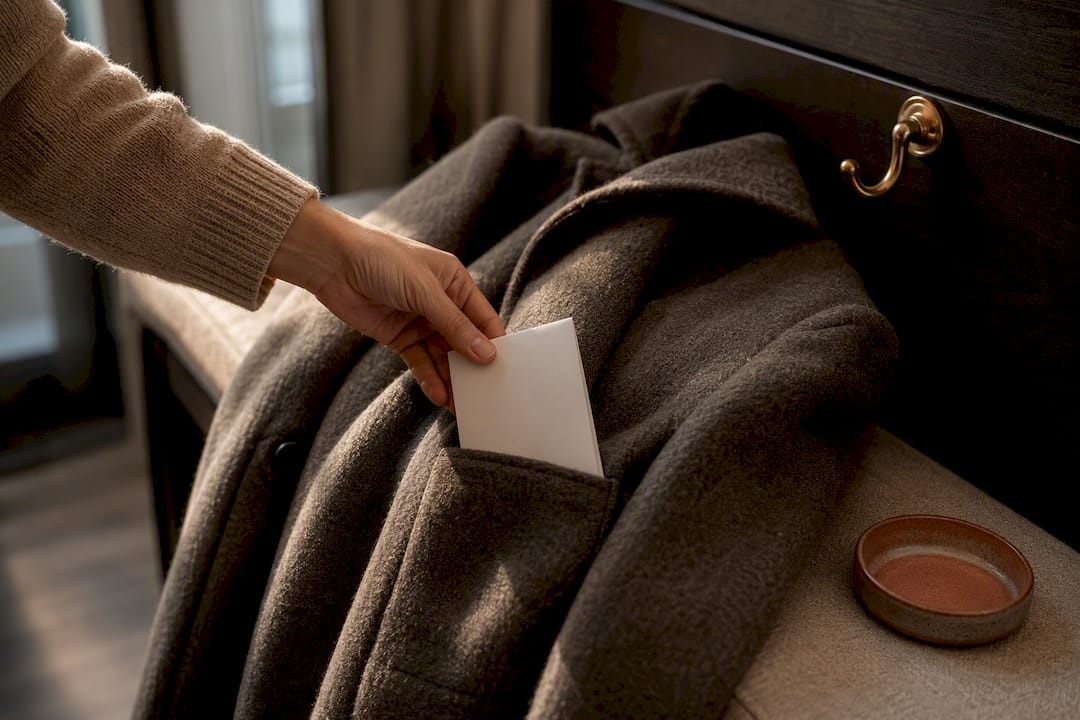
Pro Tip: Match the channel to the moment. A voice note feels more intimate for the evening buildup than a text, and a note tucked somewhere they’ll find it beats both for the final reveal. A tool like this can help by letting you draft every message in one sitting and schedule the sends, so the timing stays accurate even on a day you can’t check your phone every hour.
Logistics and Packing for a Smooth Surprise Weekend
Keep two bags packed and ready. One is yours, one is theirs, and both should include: ID or documents, any medication, chargers, and two outfit options so you’re not guessing at weather or plans.
- Prebook rides or confirm parking and transit before you leave the house.
- Where the venue allows it, request early check-in so you’re not standing in a lobby explaining a surprise.
- Pre-order or reserve restaurants ahead of time, and note any dietary restrictions when you book.
- Pack a snack bag. Hunger has ruined more surprises than bad weather ever has.
- If a host, driver, or instructor needs to be looped in, keep it simple: “This is a surprise for my partner, please don’t mention the plan by name when we arrive.”
How to Avoid a Surprise That Backfires
Surprises can strengthen a relationship, but they can also misfire if they brush past what your partner actually wants. The same research on relational surprises found real benefits alongside a real risk: some partners experience unexpected plans as a violation of the unspoken rules they thought they shared, especially around big decisions or high-stakes timing.
Three quick checks before you commit:
- Energy check. Is this a week they’re running on empty? Scale the plan down if so.
- Recent stressor check. A rough week at work or a family issue changes what counts as a treat versus a burden.
- Known limits. Respect health limits, childcare logistics, and work deadlines you already know about.
Always build in an easy out and a backup plan. Rain, a canceled booking, or a sudden work call shouldn’t sink the whole weekend, just the first version of it. And keep surprises to experiences rather than major life decisions or large purchases, which deserve a real conversation.
Why Small, Repeatable Surprises Work Better Than Big Ones
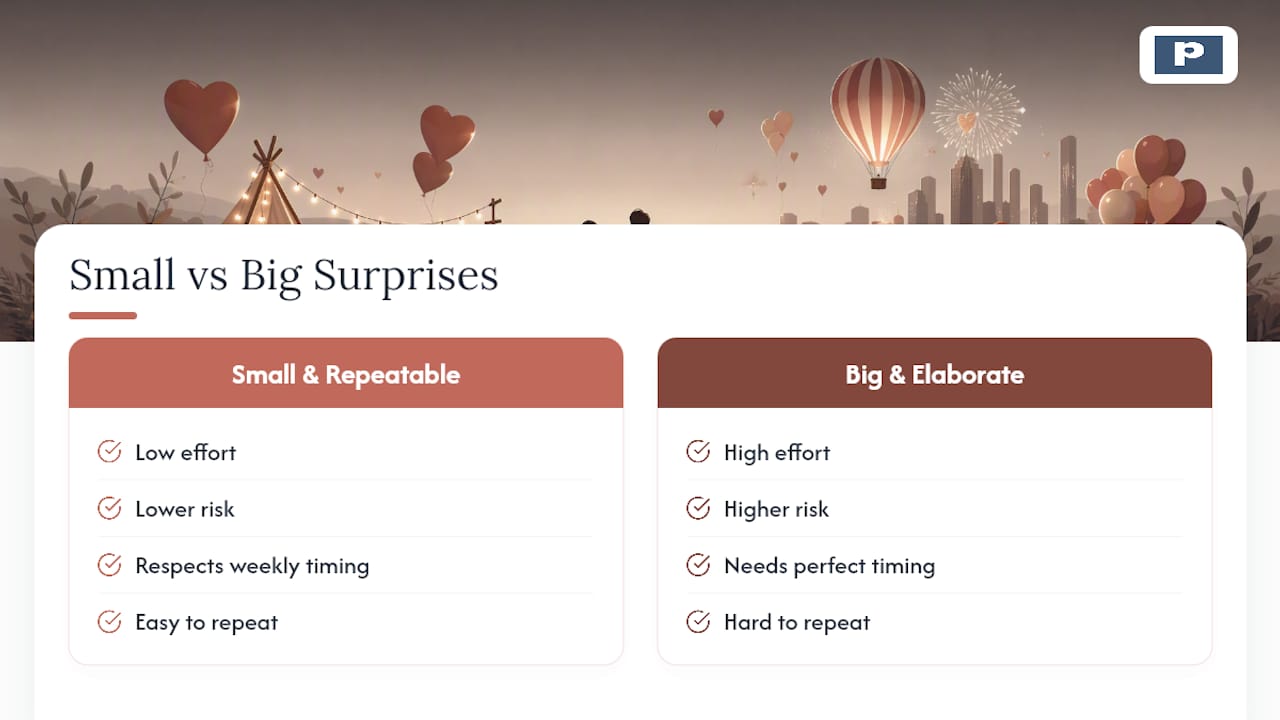
The instinct to go big for a surprise weekend is understandable, but it’s usually the wrong instinct. What the research actually points to is smaller and more repeatable: beginner-friendly activities, low-effort gestures, and timing that respects your partner’s actual week. Dopamine responds to reality exceeding prediction, and a well-timed small surprise clears that bar just as easily as an elaborate one, often with far less risk of something going wrong.
One app exists for exactly this gap. Its messaging and scheduled sends mean you can write your reveal script once and have it land at the right time without needing to check your phone again. For more low-prep inspiration, the last-minute weekend trips guide and the piece on relationship intentionality are both worth a read before your next planning session.
— Alan
Schedule the Surprise, Not Just the Trip
Most surprise weekends don’t fail because the idea was bad. They fail because the reminder text went out three hours early, or never went out at all, because you got pulled into a meeting. An app like this fixes the timing problem specifically: you draft your morning hint, your noon clue, and your evening reveal in one sitting, then schedule every one of them to send exactly when you planned, even on the busiest day of your week.
That’s the whole pitch. You’re already doing the hard part, picking a plan your partner will love and figuring out the logistics. Pingher just makes sure the messages that build toward the reveal actually go out on time, without you babysitting your phone. If prewritten templates and one-tap scheduling sound like the missing piece in your planning, get Pingher on Google Play and set up your first message before this weekend.
Sources
- Relational Surprise Experiences as a Unique Form of Relational Maintenance | Interpersona
- Why shared novelty may be the best relationship habit, experts say | Kansas City Star
- Romantic ideas for busy schedules — The Modest Man
FAQ
How Far in Advance Should I Plan a Surprise Weekend?
For a last-minute surprise, 48 to 72 hours is enough if you pick one simple experience and book it immediately. For anything requiring reservations or travel, give yourself about one to two weeks to secure bookings and pre-pay where possible.
What Are the Best Last-Minute Surprise Weekend Ideas?
A hotel-night staycation, a half-day road trip to a nearby town, or a single beginner class like pottery or cooking are among the easiest to pull off with almost no lead time.
How Do I Send Reveal Messages Without Spoiling the Surprise?
Time your hints in stages, a vague morning text, a noon photo with no caption, an evening clue, and save the direct reveal for last. An app like Pingher lets you draft all four messages at once and schedule them so the timing stays exact even on a busy day.
What Should I Avoid When Planning a Surprise for My Partner?
Avoid ignoring known stressors, health limits, or work conflicts, and never use a surprise format for a major life decision or a large purchase. Research on relational surprises shows plans that skip a partner’s real preferences can be read as a violation rather than a gift.
How Much Should a Surprise Weekend Cost?
Cost depends entirely on the idea. A staycation or home-based theme weekend can cost very little, while a half-day trip with a class or an overnight stay typically runs higher once you factor in food, activity fees, and any accommodation.
Recommended
Built for couples who care.
Pingher helps you send the right words at the right moment.
Get Pingher on Google Play