How to Send Affection Messages Between Meetings
How to Send Affection Messages Between Meetings
Sending affection messages between meetings is one of the most effective ways for busy professionals and couples to stay emotionally close during packed workdays. These short, well-timed notes, often called workday love notes or affectionate texts, do more than say “I’m thinking of you.” They act as emotional anchors that weave warmth into an otherwise task-heavy day. The key is knowing when to send them, what to say, and how to keep them feeling genuine rather than routine. Get those three things right, and a 10-second message can carry real emotional weight.
How to send affection messages between meetings without losing momentum
The biggest mistake busy couples make is treating affectionate texts as an afterthought. Workday love notes work best when they are intentional, timed well, and low in pressure. The goal is connection, not conversation.
Timing shapes how a message lands. Mornings and evenings carry the highest emotional receptivity during the day. A quick note before your partner’s first meeting sets a warm tone for their entire morning. An evening message signals that you were thinking of them even through the chaos.

Mid-day messages are underrated. A well-timed afternoon text sent during a known busy stretch often lands harder than a standard morning greeting. It says, “I know you’re slammed right now, and I still thought of you.” That specificity is what separates a meaningful message from a forgettable one.
Here are the best windows to send affectionate messages during the workday:
- Before 9:00 AM: A short encouraging note before the day starts sets a positive emotional tone.
- Late morning (10:30–11:00 AM): A quick check-in right before a meeting block shows you’re aware of their schedule.
- Early afternoon (1:00–2:00 PM): A surprise message during the post-lunch slump boosts mood without demanding attention.
- End of day (5:00–6:00 PM): A warm close-out message reinforces connection as the workday winds down.
Pro Tip: Set a recurring phone reminder at one of these windows each day. You don’t need to write a new message from scratch every time. Keep a short list of 5–6 message ideas and rotate through them.
How do you craft affectionate messages that actually feel personal?
Generic messages lose their impact fast. Specific messages that reference shared jokes, current stressors, or real-life details create far more intimacy than broad declarations of love. “Hope your day is great” is forgettable. “Good luck with the Henderson call today. You’ve got this” is not.
The best workday messages are short, casual, and grounded in something real. Over-formalizing texts strips away warmth. Think of how you’d speak to your partner in person during a quick hallway moment, then write that.
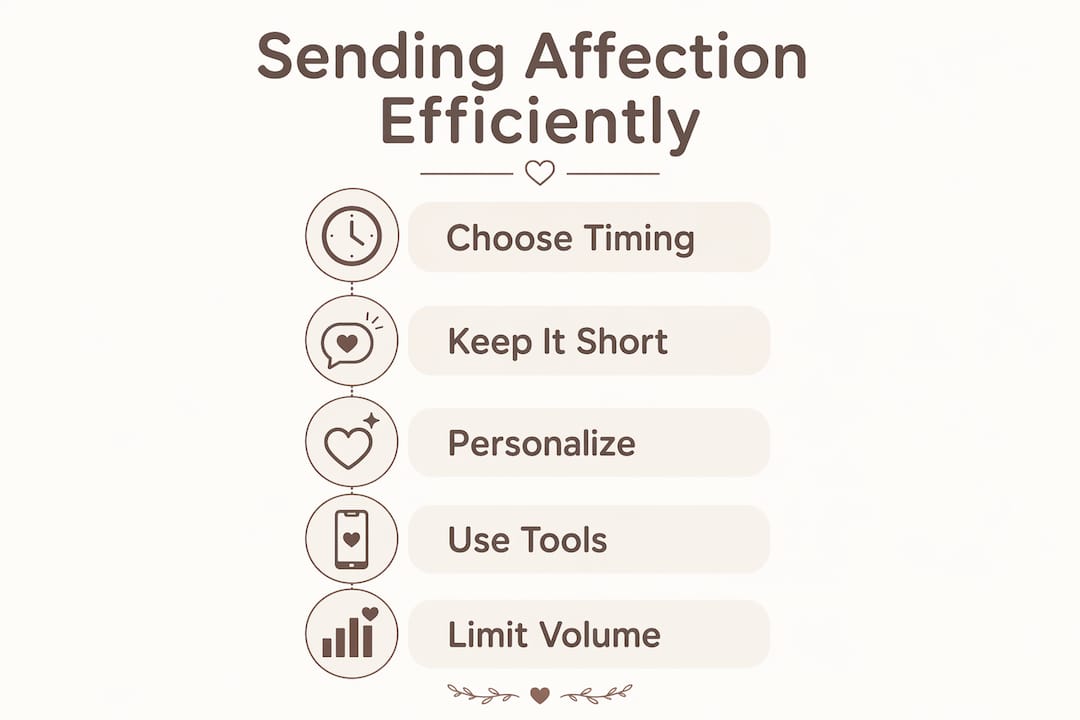
Rotate your message types to keep things fresh. Sending the same style of note every day creates a pattern that starts to feel automatic. Variety signals genuine thought.
Here’s a practical rotation to follow:
- Encouragement messages: “You’ve been working so hard this week. I see it.” These validate effort without requiring a response.
- Appreciation notes: “I keep thinking about how you handled that situation last night. You’re really good at that.” Specific praise lands deeper than general compliments.
- Playful or lighthearted texts: “Reminder: you owe me a coffee date. Collect when ready.” These add levity without emotional weight.
- Shared memory references: “Just walked past that café where we had our first real argument. Still think I was right.” Humor tied to shared history builds intimacy fast.
- Simple presence messages: “Thinking of you between meetings. No reply needed.” This one is powerful precisely because it removes any pressure.
Pro Tip: Keep a running note on your phone titled “Things I love about [name].” Add to it whenever something comes to mind. Pull from it when you need a message idea. You’ll never run dry.
The written affection benefits of this rotation go beyond just variety. Each message type targets a different emotional need: validation, appreciation, humor, nostalgia, and presence. Covering all five across a week creates a full emotional picture.
What tools and strategies make affectionate texting easier to maintain?
Consistency is the real challenge. Busy professionals don’t lack affection. They lack bandwidth. The solution is building a light system that removes friction from the habit.
Message scheduling is the most practical tool available. Most smartphones allow you to schedule texts natively or through third-party apps. Writing three messages on Sunday evening and scheduling them across the week takes under 10 minutes. That 10-minute investment pays off in daily emotional connection.
Pingher is built specifically for this use case. Its one-tap functionality lets you send a personalized, thoughtful message without drafting from scratch. Pingher handles the creative lift so you can focus on the timing and the relationship. For couples who want consistent daily connection without the mental overhead, it removes the biggest barrier: starting.
The table below compares three common approaches to managing affectionate workday messaging:
| Approach | Best for | Limitation |
|---|---|---|
| Manual texting | Spontaneous, highly personal messages | Requires time and mental energy daily |
| Scheduled drafts | Consistent delivery with low daily effort | Can feel less spontaneous over time |
| Dedicated apps like Pingher | Personalized messages with minimal effort | Works best when you personalize the content |
Balancing spontaneity with consistency is the real goal. A scheduled message is not less sincere. It reflects planning and care. The spontaneous messages you add on top of a consistent routine feel even more special because they stand out.
What mistakes kill the impact of workday affection messages?
The most common error is volume. Limiting to 2–4 well-timed texts per day maintains excitement without creating distraction. Sending eight messages in a workday turns affection into noise. Your partner stops reading carefully and starts skimming.
The second mistake is expecting a reply. The biggest communication barrier in workday messaging is the pressure to respond. When your partner feels obligated to reply, your loving note becomes a task on their to-do list. Messages that do not expect immediate replies reduce communication burnout and keep the emotional connection genuine.
Watch out for these specific pitfalls:
- Repeating the same message format daily. “Good morning, have a great day!” every single day loses meaning within a week. Rotate your types as described above.
- Sending messages during known high-stress moments. If your partner has a major presentation at 10:00 AM, a text at 9:55 AM adds pressure, not warmth. Timing awareness is a form of care.
- Using messages to start conversations. A workday affection note is not an opening for a long text exchange. Keep it self-contained.
- Going silent for days, then flooding messages. Inconsistency followed by intensity reads as guilt-driven, not affectionate. Consistency and anticipation matter more than message volume.
- Sending generic templates without personalization. Copy-paste messages feel like copy-paste care. One specific detail always outperforms a polished but generic line.
The thoughtful digital communication that actually strengthens relationships is low-pressure, specific, and consistent. Remove the pressure, add the specificity, and show up regularly. That combination works.
Key Takeaways
Affectionate workday messages build lasting emotional connection when they are timed well, specific to your partner, and free of any pressure to respond.
| Point | Details |
|---|---|
| Timing drives impact | Morning, early afternoon, and end-of-day windows carry the highest emotional receptivity. |
| Specificity beats volume | One message referencing a real detail outperforms five generic greetings. |
| Keep pressure off | Messages that don’t require a reply reduce stress and strengthen connection. |
| Rotate message types | Alternate encouragement, appreciation, playfulness, and shared memories across the week. |
| Consistency over intensity | Two to four well-spaced messages daily sustains connection better than sporadic bursts. |
Why I think most couples are overthinking this
The couples I’ve seen struggle most with workday affection are the ones waiting for the perfect moment or the perfect words. They want the message to be meaningful, so they draft it, second-guess it, and never send it. Meanwhile, their partner goes through the whole day feeling invisible.
The truth is, the bar for a meaningful workday message is lower than you think. Your partner doesn’t need poetry. They need proof that you thought of them. A single line that references something real, sent at a moment that makes sense, does more than a beautifully written paragraph sent at random.
What I’ve found actually works is treating affectionate messaging like a small professional habit, not a romantic grand gesture. You schedule your meetings. You block your focus time. You can also block two minutes to send a note that tells your partner they matter. The communication tools that support lasting relationships are the ones that make this habit frictionless, not the ones that make it elaborate.
The other thing worth saying: don’t measure success by replies. Some of the most powerful messages I’ve ever sent got no response at all during the workday. But that evening, my partner mentioned it unprompted. The message landed. It just landed quietly. That’s the whole point.
— Alan
Pingher makes workday affection effortless
Staying emotionally connected during a packed workday doesn’t require long messages or perfect timing every time. It requires a consistent habit and the right tool to support it.
Pingher is built for exactly this. Its one-tap message delivery lets you send a personalized, thoughtful note to your partner in seconds, without drafting from scratch or losing focus on your work. You can customize messages to reflect your relationship, your partner’s current stressors, and the tone that fits the moment. For couples who want to express care daily without adding to their mental load, Pingher removes every barrier between the feeling and the message. Try it and see how much a well-timed note can shift the tone of your partner’s day.
FAQ
How many affectionate messages should I send during the workday?
Two to four well-timed messages per day is the right range. More than that risks distraction; fewer can feel inconsistent.
What makes a workday love note feel genuine?
Specific details make the difference. Reference a shared memory, a current stressor, or something real from your partner’s day rather than a generic phrase.
Should I expect my partner to reply to workday affection texts?
No. Messages that don’t require a reply reduce pressure and let your partner feel loved without interrupting their workflow.
What is the best time to send affectionate messages during work hours?
Mornings before the workday starts, early afternoon during a meeting break, and end of day are the highest-impact windows for affectionate texts.
Can I schedule affection messages in advance without losing sincerity?
Yes. Scheduling messages reflects planning and care. Adding spontaneous notes on top of a consistent routine makes both feel more meaningful.
Recommended
Built for couples who care.
Pingher helps you send the right words at the right moment.
Get Pingher on Google Play