10 Ways Messaging Apps Help Relationships Thrive

10 Ways Messaging Apps Help Relationships Thrive
How messaging apps help couples improve their relationships
Messaging apps have moved well past texting. For couples, they now function as daily relationship tools, offering structured ways to stay emotionally close, communicate more honestly, and work through friction before it compounds. The ways messaging apps help relationships are both practical and measurable, and the research backs that up.
Here is what they actually do:
- Create intentional daily connection through prompts and check-ins, not just reactive texting
- Build communication consistency, so partners hear from each other even on busy days
- Lower the emotional stakes of difficult conversations by framing them through a neutral app
- Support conflict repair with guided tools rather than leaving couples to improvise
- Strengthen emotional intimacy by making it easier to share feelings in real time
- Research links frequent app use to measurably higher relationship quality scores
None of this happens automatically. The apps that work best are the ones designed around psychological principles, not just convenience.
Table of Contents
- What relationship messaging apps actually do
- What the science says about relationship apps
- Practical benefits couples notice in daily communication
- Popular relationship messaging apps in the United States
- How often you use an app matters more than which app you choose
- Real drawbacks worth knowing before you download
- How to use messaging apps when conflict arises
- Privacy and security in relationship messaging apps
- Pingher makes daily connection effortless
- Key Takeaways
What relationship messaging apps actually do
The best relationship apps are built around features that encourage regular, meaningful interaction. Understanding what those features are helps couples choose the right tool and use it well.
- Daily mood and emotional check-ins: Partners log how they are feeling, giving both people a low-pressure way to stay aware of each other’s emotional state without requiring a full conversation.
- Conversation starters and prompts: Pre-written questions move couples past small talk into topics that actually matter, from finances to future plans to childhood memories.
- Conflict resolution tools: Guided conversation flows and repair prompts help couples address tension without it escalating. Some apps include structured “cool-down” features.
- Shared assessments: Relationship health quizzes and compatibility tools give couples a shared language for discussing dynamics they might otherwise struggle to name.
- Notifications and reminders: Scheduled nudges create a communication rhythm, which is especially useful for couples who get absorbed in work or parenting and let connection slip.
Apps that incorporate therapeutic foundations like the Gottman Method or Emotionally Focused Therapy tend to produce more durable results because their prompts are grounded in what actually changes relationship behavior.
What the science says about relationship apps
The evidence for relationship apps is stronger than most people expect. A mixed methods evaluation of the Paired app found that relationship quality scores were 35.5% higher among users who had engaged with the app for more than three months compared to new users. That is not a marginal difference.
Therapists have noted that digital check-ins function effectively as mood tracking tools, helping partners monitor relational health gently and reducing the need for loaded, high-stakes conversations. The app becomes a kind of ongoing pulse check.
Researchers also point to a concept called “Augmented Intimacy,” the idea that technology can ethically enhance empathy and genuine human connection rather than replace it. The goal is not to outsource intimacy to an algorithm but to use digital structure to make space for real emotional exchange.
Practical benefits couples notice in daily communication
The day-to-day gains from using a relationship messaging app are often quieter than the research headlines suggest, but they add up.
- Consistency without pressure: A daily prompt removes the burden of deciding who initiates. Both partners show up because the app invites them, not because one person had to ask.
- Lower-stakes conversations: Sharing a mood check or answering a fun question together feels lighter than “we need to talk.” That lower emotional temperature makes honesty easier.
- Easier access to feelings: Many people find it simpler to type a feeling than to say it out loud, especially after a long day. Apps give that a natural outlet.
- Support for hesitant partners: Apps reduce barriers for partners who feel uncomfortable initiating emotional conversations, offering a phone-based, low-stakes entry point.
Pro Tip: If there is a topic you have been avoiding, let the app raise it first. Framing a sensitive subject through a shared prompt rather than a direct accusation changes the entire tone of the conversation.
Popular relationship messaging apps in the United States
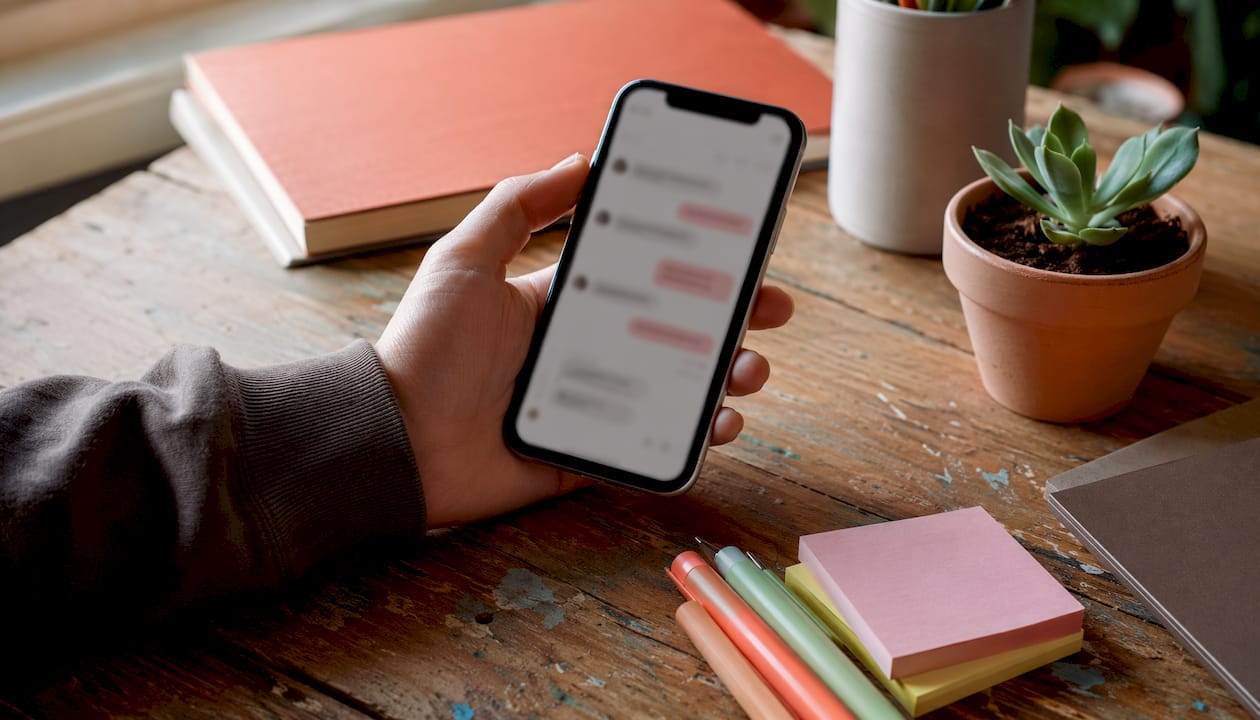
Several apps have gained traction among American couples, each with a distinct approach to improving connection and communication.
| App | Platform | Key Features | Psychological Basis |
|---|---|---|---|
| Paired | iOS, Android | Daily questions, quizzes, tips, in-app sharing | Research-backed prompts |
| Gottman Card Decks | iOS, Android | Conversation decks, intimacy builders | Gottman Method |
| Meet Me Here | Web, iOS | Therapist-recommended check-ins, guided tools | Emotionally Focused Therapy |
| Lasting | iOS, Android | Structured courses, assessments | Gottman + EFT |
| Pingher | iOS | One-tap personalized messages, daily reminders | Behavioral consistency |
Pingher stands apart from the others in one specific way: it is built for couples who want to express affection and appreciation daily without the friction of composing a message from scratch. Its one-tap functionality means a thoughtful, personalized message reaches your partner in seconds. Where most apps ask couples to sit down together and answer questions, Pingher fits into the gaps of a busy day.
How often you use an app matters more than which app you choose
Engagement frequency is a statistically significant predictor of relationship outcomes. Couples who use digital relationship tools three or more times per week see significant improvements in communication and satisfaction. This tracks with what behavioral science tells us about habit formation. A digital prompt embedded in daily routine creates a temporal structure that makes emotional connection feel automatic rather than effortful. Over time, the habit of checking in becomes part of how a couple operates, not something they have to remember to do.
Stat to know: Couples who use relationship apps three or more times per week report greater relationship gains than those who engage only occasionally, according to research on app effectiveness.
Routine engagement also prevents the slow drift that happens in long-term relationships. When couples stop communicating proactively, small misunderstandings accumulate. Regular app use interrupts that pattern before it becomes a problem.
Pro Tip: Treat your app check-in like a standing appointment, not an optional extra. Couples who schedule a consistent time, even five minutes after dinner, build the habit faster and sustain it longer.
Real drawbacks worth knowing before you download
No app fixes a relationship on its own, and a few specific pitfalls are worth naming before you commit.
Over-reliance on structure. Some couples start to feel that they can only have meaningful conversations inside the app. When the app becomes a crutch, it can actually reduce the spontaneous, unstructured communication that real intimacy depends on.
Gamification risks. Apps that use streaks, points, and badges to encourage engagement can subtly shift the motivation from genuine connection to keeping a score. Gamification can aid habit formation but risks making intimacy feel transactional if the design is not thoughtful.
Mismatched engagement. If one partner is enthusiastic and the other is not, the app can become a source of resentment rather than connection. Both people need to buy in for it to work.
Substituting for real conversation. A check-in app works best as a supplement to face-to-face communication, not a replacement. Couples who use digital tools to avoid hard in-person conversations tend to see the opposite of the intended effect.
How to use messaging apps when conflict arises
Conflict is where most couples abandon their communication tools entirely, which is exactly the wrong move. Apps are particularly useful during tension because they introduce a neutral party into the dynamic.

Using an app to initiate a difficult topic reduces the feeling of personal attack. When the prompt comes from the app rather than from one partner directly, it is harder to interpret as criticism. That small shift in framing can change whether a conversation escalates or resolves.
A few practical approaches:
- Use a guided conflict prompt rather than sending a message in the heat of the moment. Most relationship apps include repair tools specifically for this.
- Share your mood check before raising the issue. It gives your partner context and signals that you want to connect, not fight.
- Agree in advance that certain topics get raised through the app first. This is especially useful for recurring friction points like finances or household responsibilities.
- After a difficult conversation, use the app’s affirmation or appreciation features to close the loop. Ending on a positive note is not just feel-good advice; it is a core principle in Gottman research.
Privacy and security in relationship messaging apps
Sharing emotional data with an app is more intimate than most people realize when they sign up. A few things are worth checking before you hand over that kind of access.
End-to-end encryption is the baseline standard for any app handling private conversations. Not all relationship apps offer it. Check the privacy policy before you assume your messages are protected.
Data sharing practices vary widely. Some apps monetize user data for research or advertising purposes. Read what the app does with your mood logs, conversation history, and usage patterns.
Account access and shared profiles. Most couples apps link two accounts together. Understand what each partner can see and whether either person can export or delete shared data independently.
Third-party integrations. Apps that connect to calendars, health apps, or social platforms expand their data footprint. Know what you are connecting before you authorize it.
The messaging frequency and intimacy data that apps collect can be genuinely useful for understanding your relationship patterns. Just make sure the app you trust with that data has the security practices to match.
Pingher makes daily connection effortless
Most relationship apps ask a lot of you: sit down together, answer questions, complete exercises. That works for some couples. For others, especially busy ones, the effort itself becomes the barrier.
Pingher takes a different approach. Instead of structured sessions, it gives you one-tap access to personalized, thoughtful messages you can send your partner in seconds. No composing, no scheduling, no friction. The message lands when it matters, whether that is a Tuesday morning before work or a Wednesday night when words feel hard to find.
It is built specifically for couples who want to express love and appreciation consistently, not just when they have the time or energy to craft something from scratch. The personalized messaging tools inside Pingher are designed to keep affection present in daily life, which is exactly what the research on relationship satisfaction points to as the key driver of long-term connection.
If you have been reading about the benefits of consistent communication and wondering how to actually make it happen without adding another task to your day, Pingher is worth trying.
Key Takeaways
Messaging apps improve relationship quality most when couples use them consistently and treat them as a supplement to real conversation, not a replacement for it.
| Point | Details |
|---|---|
| Frequency drives results | Using relationship apps frequently produces significantly greater gains than sporadic engagement. |
| Research-backed improvement | Users who engaged with the Paired app for 3+ months showed 35.5% higher relationship quality scores than new users. |
| Conflict gets easier | Apps act as neutral prompts, making it less confrontational to raise sensitive topics with a partner. |
| Drawbacks are real | Over-reliance, gamification, and mismatched engagement can undermine the benefits if couples are not intentional. |
| Pingher fits busy couples | Pingher’s one-tap messaging lets partners express daily affection without the effort of composing messages from scratch. |
Recommended
Built for couples who care.
Pingher helps you send the right words at the right moment.
Get Pingher on Google Play