5 to 15 Words: Valentine Messages for Texts, Cards, and Fast Sends
5 to 15 Words: Valentine Messages for Texts, Cards, and Fast Sends
This page hands you ready-to-send valentine messages sorted by tone and recipient, so you spend less time staring at a blank text box. Pick a tone, pick a recipient, then personalize with one memory or pet name and you’re done. Save your favorites so they’re ready to schedule and send with one tap.
TL;DR:
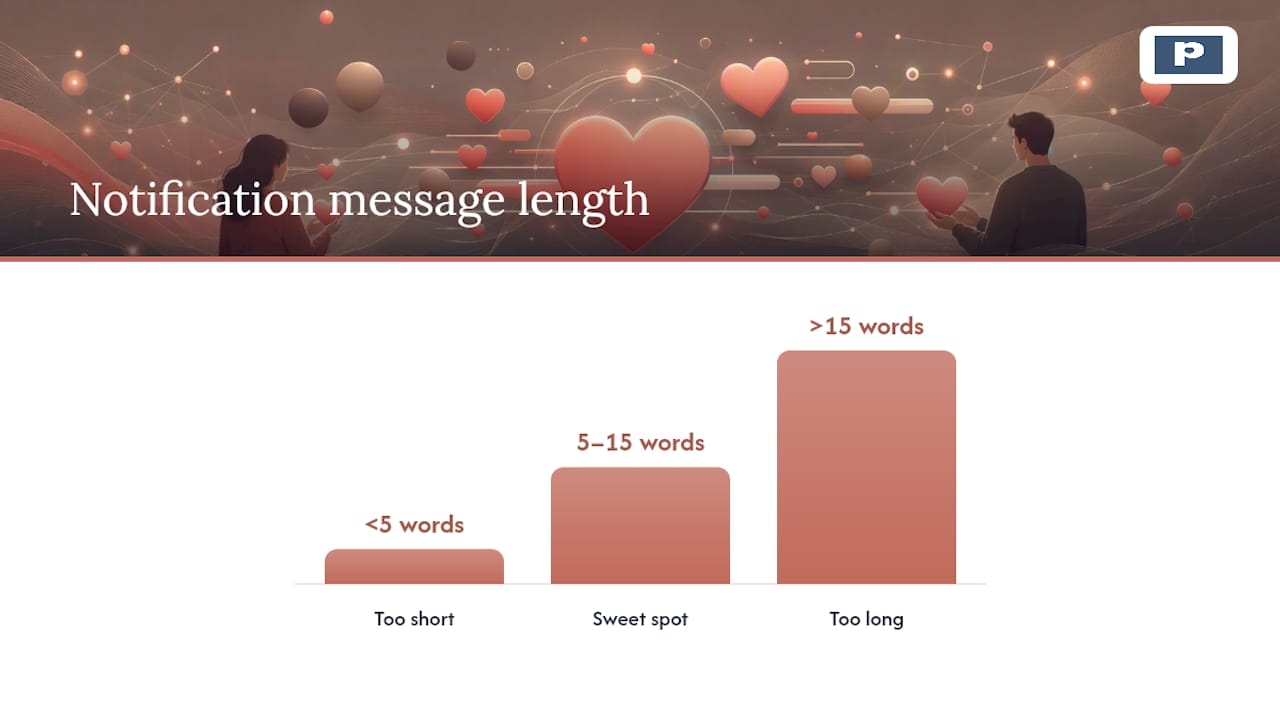
- Short notifications of 5 to 15 words are most effective, as longer texts risk truncation and shorter ones may seem insincere.
- Personalizing messages with specific memories, pet names, or promises significantly increases their authenticity and emotional impact.
- Use different message formats tailored to the platform: full sentences and no emojis for cards, one or two lines with emojis for texts, and punchy hooks for social media captions.
- The tradition of Valentine messages stems from historical practices of handwritten notes, with symbols like hearts and roses carrying deep cultural meanings.
- Focus on small, consistent, personal messages throughout the year, not just on February 14, as these build genuine connection over time.
Table of Contents
- Short Valentine Messages for Texts and Notifications
- Romantic Valentine Messages for Cards and Longer Notes
- Funny and Playful Valentine’s Day Messages
- Valentine Messages for Friends and Family
- Valentine Messages by Recipient and Relationship Stage
- How to Personalize Any Valentine Template
- Matching Your Message to Cards, Texts, and Captions
- Where Valentine Messages Actually Came From
- The Symbols Behind Every Valentine Message
- How Valentine Greetings Differ Around the World
- Why the Small Message Habit Matters More Than the Big Gesture
- How Pingher Makes These Messages Easy to Send
- Sources
Short Valentine Messages for Texts and Notifications
A text that pops up on a lock screen has one job: land fast. Short messages of 5 to 15 words work best for texts and notification previews, since that length maximizes readability and hits before the reader even fully opens the app, according to Shutterfly’s roundup of Valentine’s Day card messages. Anything longer gets truncated or skimmed. Anything shorter can feel like an afterthought.
Here are short lines grouped by the mood you’re going for.
Sweet:
- “You’re my favorite part of every day.”
- “Loving you is the easiest thing I do.”
- “Happy Valentine’s Day to my whole heart.”
- “Still choosing you. Always will.”
- “You make ordinary days feel good.”
Flirty:
- “You’re still the reason I check my phone.”
- “Roses are red, you’re still the one I want.”
- “Warning: I might kiss you later.”
- “You’re my favorite kind of trouble.”
- “Save me a seat next to you forever.”
Appreciative:
- “Thank you for being my calm.”
- “You show up for me every single day.”
- “I don’t say it enough. I notice everything you do.”
- “You make this life feel steady.”
- “Grateful doesn’t cover it, but happy Valentine’s Day anyway.”
Pro Tip: Send the short line first thing in the morning, before the day gets noisy. A message that lands at 7 a.m. reads as thoughtful. The same words at 9 p.m. can read as an afterthought.
Romantic Valentine Messages for Cards and Longer Notes
Cards and letters give you room a text doesn’t. That extra space is where generic lines turn into something that actually sounds like you. Skip “you complete me” and reach for a specific memory instead. Specificity is what separates a card someone keeps from one that gets recycled.
Short romantic lines (good for a card opener or a caption):
- “You are my favorite person on my favorite day.”
- “Every love story is beautiful, but ours is my favorite.”
- “I fall for you a little more every year.”
Medium card sentences:
- “I still remember the first time you made me laugh until it hurt. Happy Valentine’s Day, love.”
- “You’ve turned ordinary Tuesdays into something worth looking forward to.”
Paragraph-length options for a card:
“Some people search their whole lives for what we found without even trying. You’re patient with my bad moods, you laugh at my worst jokes, and you still choose me on the hard days. I love you more than I know how to say, so I’ll just keep showing up. Happy Valentine’s Day.”
“I could write you a poem, but you’d probably rather I just told you the truth: you make my life better, calmer, and a lot funnier. Thank you for being my person. Here’s to another year of us.”
“Remember our first road trip, when the map app crashed and we ended up eating tacos in a parking lot at midnight? That’s still one of my favorite nights. You make the unplanned moments the best ones. I love you.”
Good Housekeeping’s collection of card messages notes that the most popular Valentine’s Day lines work best when personalized with a pet name or a shared memory rather than left generic. If you want more options built around gratitude and partner-specific language, A guide to thoughtful message ideas for partners has additional angles worth borrowing.
Funny and Playful Valentine’s Day Messages
Humor works when it’s aimed at your relationship’s inside jokes, not at your partner’s insecurities. A good rule: if the joke would still be funny if a stranger overheard it, it’s probably safe. If it only works because you know exactly which nerve it touches, skip it.
One-liners and puns:
- “You’re the peanut butter to my awkward jelly.”
- “I’m ‘cheddar’ with you than anyone else.”
- “You’re the reason I check my phone during meetings.”
- “Roses are red, violets are blue, I’d still pick you even when you snore.”
- “You had me at ‘I brought snacks.’”
- “You’re not perfect, but you’re perfect for me. Mostly.”
- “I love you more than free shipping.”
- “You’re my favorite notification.”
- “Happy Valentine’s Day to the reason my group chat is boring now.”
- “I’d swipe right on you every single time.”
Pro Tip: Keep the joke about a shared habit, not a physical insecurity or a sore spot. “You still can’t parallel park” lands as playful. Anything about weight, money stress, or family tension usually doesn’t.
Valentine Messages for Friends and Family
Valentine’s Day isn’t only for romantic partners. Roundups covering the holiday consistently carry dedicated friend and family sections, which tells you plenty of people are sending platonic love notes, too.
For friends and Galentine’s:
- “Happy Galentine’s Day to my favorite person to complain to.”
- “You’re the friend who makes hard years easier. Love you.”
- “No romance required. You’re still my favorite valentine.”
For family and kids:
- “Being your parent is the best love story I’ve ever lived.”
- “Happy Valentine’s Day to my favorite little human.”
- “Grandma’s valentine is you, always.”
Keep classroom or group notes light and universal, no inside jokes or references only one person would understand. Save the specific, personal lines for one-on-one cards where the context makes sense.
Valentine Messages by Recipient and Relationship Stage
New relationships call for warmth without overcommitment. Long marriages can carry more weight and history in fewer words. Matching your language to the stage keeps a message from feeling either too intense or too flat.
For her:
- “You make my [everyday thing, like commute or coffee break] better just by existing in it.”
- “Happy Valentine’s Day to the woman who [specific quality, like makes me laugh at 2 a.m.].”
For him:
- “You’re still my favorite person to do nothing with.”
- “Happy Valentine’s Day to the guy who [specific memory, like fixed my car and didn’t complain].”
For a spouse:
- “After many years, you’re still my favorite decision.”
- “Marrying you was the best thing I’ve ever signed up for.”
For a new relationship:
- “It’s early, but I already know you’re someone worth knowing better.”
- “This is new, but you already feel like a good kind of familiar.”
Parade’s Valentine’s collection organizes examples this exact way, by relationship stage and recipient, including pop-culture references for readers who want a lighter touch. A post on short love messages with real relationship impact has more phrasing built around long-term partners specifically.
How to Personalize Any Valentine Template
A template is a starting point, not a finished message. Three moves turn a generic line into something that actually sounds like your relationship.
- Reference a memory. Swap a generic statement like “you make me happy” for one that recalls a specific shared experience.
- Add a small promise or action. “I love you” becomes “I love you, and I’m making your favorite dinner tonight to prove it.”
- Use a private nickname or inside joke. “Happy Valentine’s Day” becomes “Happy Valentine’s Day, Bug” or whatever only the two of you would recognize.
Personalization built from a quick anecdote, a small promise, and a private nickname reliably reads as more sincere than a longer, generic message. It’s not about writing more. It’s about writing something only your relationship could produce.
Good Housekeeping’s message guide backs this up, noting that personal touches outperform length almost every time. This app was built around exactly this idea. You save a template, add your own detail, and schedule it to send the moment it matters, without redoing the work every year. If you want the fuller walkthrough, a piece on how message personalization works breaks down the process step by step.
Pro Tip: Keep a running note of small details, a joke, a food they mentioned, a show you’re watching together. Future you will thank present you when Valentine’s Day sneaks up again.
Matching Your Message to Cards, Texts, and Captions
The same sentiment needs different packaging depending on where it lands. A card can hold three sentences. A text should hold one. A caption needs a hook in the first few words because that’s all anyone reads before scrolling past.
- Card: Full sentences, no emojis needed, handwriting adds warmth on its own.
- Text or WhatsApp message: One or two lines, an emoji or two is fine, keep it scannable.
- Social caption: Short and punchy, front-load the best line since captions get cut off.
Here’s the same sentiment rewritten three ways: Card: “You’ve made every ordinary day feel like something worth remembering. I love you.” Text: “You make ordinary days feel like something. Love you. 💕” Caption: “Ordinary days, extraordinary you. 💕”
Euronews’s roundup of WhatsApp-specific Valentine messages makes a similar point, noting that tone and emoji use should shift with the platform and the recipient’s own texting style. Whatever the format, sincerity still beats cleverness.
Where Valentine Messages Actually Came From
The tradition traces back to Saint Valentine, a name attached to at least one third-century Roman martyr, though the holiday’s romantic association didn’t solidify until centuries later. Geoffrey Chaucer’s 1382 poem “Parlement of Foules” is often credited as the first written link between Saint Valentine’s Day and romantic love, tying the date to the folk belief that birds chose their mates in mid-February.
Handwritten valentine notes became common in the 1700s, when printed cards were expensive and personal letters were the standard. By the 1840s, mass-produced cards took over in the United States and Britain, largely thanks to cheaper printing and the postal system. Esther Howland, sometimes called the “Mother of the Valentine,” helped popularize elaborate lace-and-ribbon cards in America starting in 1847.
What’s stayed consistent for nearly two centuries is the core idea: a short, sincere message meant for one specific person. Texts and DMs replaced paper for plenty of couples, but the format shift doesn’t change the goal. You’re still trying to say something true, briefly, to someone you care about. That’s worth remembering next time a blank text box feels harder than it should.
The Symbols Behind Every Valentine Message
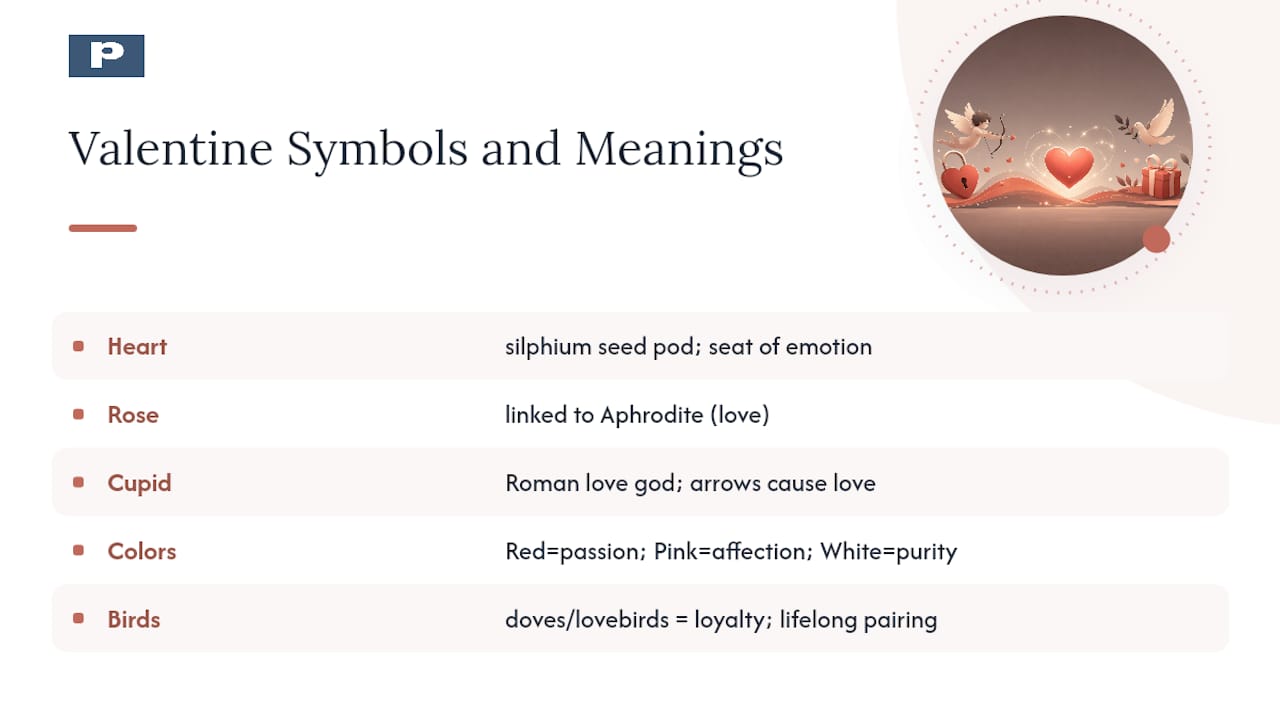
Hearts, roses, and cupids show up in nearly every valentine ever written, and each one carries its own backstory. The heart shape doesn’t anatomically resemble a real heart. Historians trace the symbol partly to the silphium plant, an ancient contraceptive herb whose seed pod was heart-shaped, and partly to medieval depictions of the heart as the seat of emotion.
Red roses became the flower of choice largely through Greek mythology, where roses were linked to Aphrodite, the goddess of love. Cupid, the winged cherub with a bow, comes from the Roman god Cupid, son of Venus, whose arrows were said to make anyone he struck fall instantly in love.
Color plays a role too. Red signals passion and is the dominant Valentine’s color for a reason. Pink softens the message toward affection and friendship, which is part of why Galentine’s cards often lean pink over red. White suggests purity and is more common in longer-married-couple cards than in new-relationship ones.
Doves and lovebirds appear less often now but still show up in traditional cards, symbolizing loyalty and lifelong partnership since these birds are known to pair for extended periods. Knowing the symbol behind a phrase or image can help you choose one that actually matches what you’re trying to say, rather than picking whatever image looks nice on the front of a card.
How Valentine Greetings Differ Around the World
Valentine’s Day isn’t celebrated the same way everywhere, and the message conventions shift accordingly. In Japan, women traditionally give chocolate to men on February 14, and men reciprocate a month later on White Day, March 14, flipping the gift-giving direction most Western readers expect.
In South Korea, the 14th of nearly every month carries some kind of romantic significance, with Valentine’s Day itself following the give-chocolate tradition similar to Japan’s. In Finland and Estonia, the day is called Friend’s Day, “Ystävänpäivä” and “Sõbrapäev” respectively, and the messages sent skew almost entirely platonic, aimed at friends rather than romantic partners.
In Wales, Saint Dwynwen’s Day on January 25 functions as a separate, older romantic holiday, with its own greeting traditions distinct from February 14. In parts of Latin America and the Philippines, the day is often marketed as a broader “Day of Love and Friendship,” which is part of why messages there frequently address friends and family alongside partners.
None of this means you need to adopt another country’s customs. It’s a reminder that the instinct behind a Valentine message, telling someone specific that they matter, shows up everywhere, even when the packaging looks different. Wherever your recipient is from, the same core rule applies: specific and short beats vague and long.
Why the Small Message Habit Matters More Than the Big Gesture
The instinct on Valentine’s Day is to swing big: a bigger gift, a fancier dinner, a longer paragraph. What actually sticks with people, based on how these message roundups keep getting built and reused year after year, is the small, specific line. Nobody keeps a card because the wording was elaborate. They keep it because one sentence sounded exactly like the person who wrote it.
The habit matters more than the holiday. A single well-placed message on February 14 is nice. A pattern of them across the year is what actually builds the sense of being noticed. That’s the part most advice columns skip, they treat Valentine’s Day as a one-time performance instead of a data point in an ongoing habit.
Use the lines in this article as a starting point, not a finish line. Add your own memory, your own nickname, your own small promise. There exists an app designed for exactly this kind of habit, small, personal messages sent without a big production.
— Alan
How Pingher Makes These Messages Easy to Send
This app is the shortcut between having a good message idea and actually sending it before the moment passes. You save the lines you like from this list, personalize them with your own memory or nickname, and schedule them to land exactly when you want, morning coffee, lunch break, or right before your partner sees the card on the counter. The one-tap send means you’re not rewriting a message from scratch every time February rolls around.
Busy couples who want to keep the daily connection going, not just on Valentine’s Day, get the most out of it. If you tend to think of the perfect message at 11 p.m. and forget it by morning, Pingher’s reminders and templates solve exactly that problem. Set up your first message library and get Pingher on Google Play before this Valentine’s Day catches you unprepared again.
Sources
For more inspiration beyond this list, a few sources are worth bookmarking:
- Valentine’s Day card messages for every relationship (Shutterfly)
- 83 Best Valentine’s Day Messages to Write in a Card (Good Housekeeping)
- Valentine’s Day messages (Parade)
Recommended
Built for couples who care.
Pingher helps you send the right words at the right moment.
Get Pingher on Google Play