How Emotional Connection Is Built in Relationships

How Emotional Connection Is Built in Relationships
Emotional connection is defined as the ongoing process of feeling deeply seen, accepted, and safe with your partner through daily acts of vulnerability, empathy, and nervous system regulation. It is not a feeling you either have or lack. It is a practice you build, lose, and rebuild repeatedly. Researchers and couples therapists who use frameworks like the Secure Attachment Loop and the Connection First Protocol agree: emotional intimacy is a biological practice shaped by your nervous system, not your logic. Understanding how emotional connection is built gives you a repeatable method for deepening intimacy, not just a theory.
What are the biological foundations of emotional connection?
Emotional connection starts in the body, not the mind. Nervous system co-regulation is the process by which your partner’s calm physical presence lowers your stress response, and yours lowers theirs. When one partner is activated by stress, the fight, flight, or freeze response shuts down the brain’s capacity for empathy and closeness. You cannot think your way into connection when your body is braced for threat.
Attachment theory frames partners as each other’s primary “safe harbors.” When you feel physically and emotionally safe with someone, your nervous system shifts from protection mode to bonding mode. This is why physical safety and somatic awareness must come before any attempt at cognitive problem-solving. Trying to resolve conflict while your body is still in threat mode is like trying to have a conversation in a burning room.

The Secure Attachment Loop is a five-step couples therapy framework that moves partners from emotional self-protection to genuine closeness through vulnerability and empathy. It reframes the relationship dynamic from “me vs. you” to “we.” Each step builds on the last, and the loop is designed to be repeated, not completed once.
Emotional resonance is the ability to stay present with your partner’s emotional reality without shutting down or deflecting. It is the bedrock of mature connection. Most people confuse it with agreement, but it simply means you can register what your partner feels without needing to fix or dismiss it.
Pro Tip: Before any difficult conversation, spend two minutes doing slow, synchronized breathing with your partner. This activates co-regulation and signals safety to both nervous systems before a single word is spoken.
What communication practices build emotional intimacy?
Attuned listening is the single most powerful communication skill for developing emotional connections. It means reflecting the emotion behind what your partner says, not the facts. When your partner says, “I had a terrible day,” attuned listening responds with, “That sounds exhausting. What happened?” not “Did you talk to your manager?” Sharing the emotions behind events deepens understanding far more than exchanging information.
Relationship researcher John Gottman identified four destructive communication patterns, which he called the Four Horsemen: criticism, contempt, defensiveness, and stonewalling. Attuned listening directly prevents all four. When you reflect emotions without judgment, you remove the conditions that trigger contempt and defensiveness. The antidote to each Horseman is a form of empathy, and empathy requires you to listen for feelings, not just facts.
Vulnerability is the mechanism that creates trust. Naming your own emotions, even when it feels risky, signals to your partner that you trust them with your inner world. That signal invites them to do the same. The key is gradual disclosure. Emotional dumping, which means oversharing intense struggles before safety is established, overwhelms a partner’s nervous system and creates distance instead of closeness.
Here are four communication practices that consistently strengthen emotional bonds:
- Name your emotion before your complaint. Say “I felt scared when you didn’t call” instead of “You never call when you’re late.”
- Ask open-ended feeling questions. “What was the hardest part of that for you?” opens more than “How was your day?”
- Pause and reflect before responding. Repeat back what you heard before offering your perspective.
- Share one small vulnerability daily. Start with low-stakes disclosures and build toward deeper ones over weeks, not days.
Pro Tip: Set a weekly “feelings check-in” of 20 minutes where neither partner is allowed to offer advice or solutions. The only goal is to listen and reflect. This single ritual builds more trust than most couples accumulate in months of ordinary conversation.
What daily rituals support ongoing emotional connection?
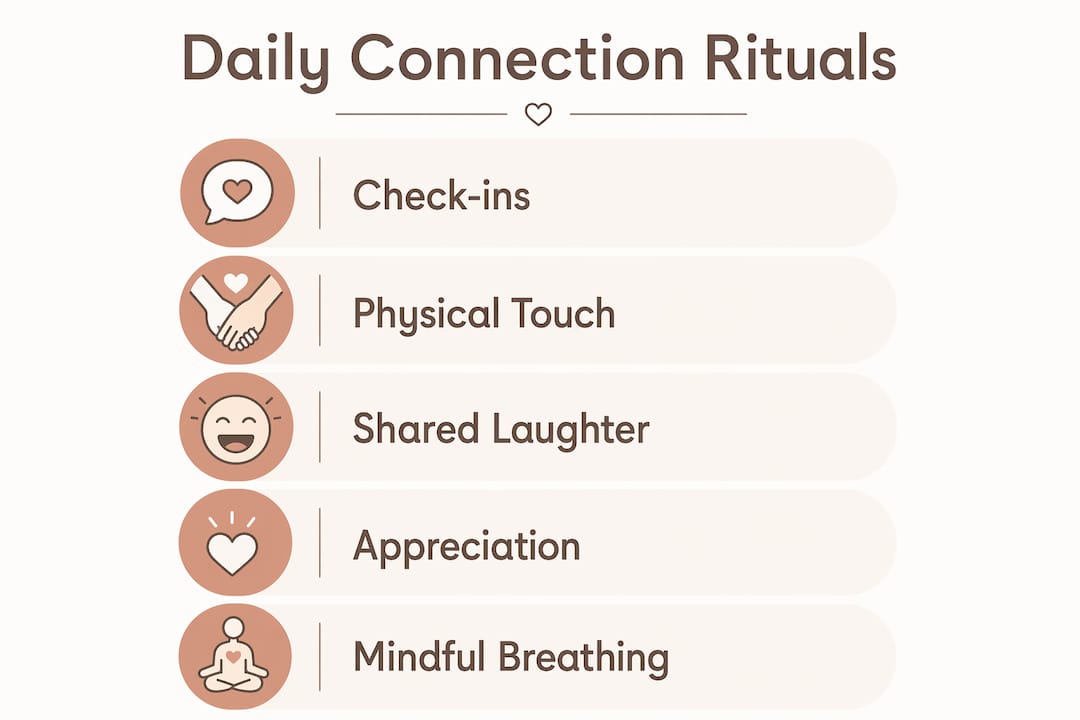
Small, high-frequency interactions build deeper emotional bonds than grand gestures. A surprise vacation creates a memory. A daily two-minute check-in creates a relationship. The difference is repetition. Consistent micro-moments of care weave connection back into the fabric of daily life in a way that one-off events simply cannot replicate.
Physical touch is one of the most direct ways to reinforce emotional safety. A six-second kiss or holding hands during a conversation boosts bonding hormones like oxytocin and signals care without words. The key is touch without expectation. When physical affection is tied to a request or outcome, it loses its bonding power. Touch offered freely, consistently, and without agenda builds the deepest trust.
Shared laughter and joyful experiences produce neurological bonding. Couples who play together, laugh together, and pursue shared novelty feel significantly closer and more supported. Play is not frivolous. It is a direct input to the bonding system.
The table below compares different types of emotional intimacy behaviors by category, so you can identify where your relationship is strong and where it needs attention.
| Type | Example behaviors | Primary effect |
|---|---|---|
| Verbal | Daily check-ins, feeling questions, appreciation statements | Builds trust and understanding |
| Physical | Six-second kiss, hand-holding, non-sexual touch rituals | Regulates nervous system, signals safety |
| Experiential | Shared hobbies, new activities, playful moments | Creates neurological bonding through joy |
| Reflective | Weekly undistracted dialogue, gratitude sharing | Deepens long-term emotional depth |
Daily rituals like affectionate touch and intentional appreciation increase oxytocin and dopamine, which are the hormones most directly tied to bonding and trust. This is not metaphor. It is biology. When you choose to express care consistently, you are literally changing your partner’s brain chemistry in ways that make them feel safer and more attached to you.
How do couples repair connection after conflict?
Rupture and repair cycles are not signs of a failing relationship. They are the mechanism through which connection deepens. Every disconnection followed by a deliberate return to closeness builds stronger trust than the original attraction. The goal is not to avoid conflict. The goal is to repair well.
Repair requires three specific elements:
- Accountability without blame. Recognizing your impact on your partner, even when your intentions were good, is what moves both of you past defensiveness. Accountability is about acknowledging effect, not assigning fault.
- Empathy before explanation. Offering your reasoning before your partner feels heard shuts the repair process down. Empathy first, explanation second.
- A return to “we.” Conflict pulls partners into opposing corners. Repair means deliberately stepping back to the shared space. Phrases like “I want us to figure this out together” signal that the relationship is more important than winning the argument.
Many couples also make the mistake of forcing repair conversations while their bodies are still activated. The somatic boundary, which is the body’s physical state during conflict, determines whether a conversation lands as connection or threat. If your jaw is clenched and your chest is tight, your brain is not in a state to receive empathy. Take a regulated break first, then return.
Connection is naturally dynamic. The goal is not constant closeness. The goal is the capacity to return to each other deliberately after disconnection. That capacity, practiced over time, is what relational resilience actually looks like.
How can you start building emotional connection today?
Building emotional bonds does not require a therapist, a retreat, or a dramatic conversation. It requires one small, consistent practice started today. The following steps give you a clear entry point.
- Regulate your body first. Before any emotionally significant conversation, take three slow breaths and check whether your body feels open or braced. If you are braced, wait or walk.
- Name one emotion out loud. Tell your partner one thing you felt today, not one thing that happened. “I felt proud when my presentation went well” is more connecting than a summary of your schedule.
- Reflect before responding. In your next conversation, repeat back what you heard before you reply. “So it sounds like you felt overlooked. Did I get that right?” This one habit changes the entire tone of a relationship.
- Set one weekly connection time. Block 20 minutes with no phones, no screens, and no agenda beyond being present with each other.
- Be patient with the process. Emotional intimacy requires repeated cycles of rupture and repair. Progress is not linear, and that is not a problem. It is how connection actually grows.
Pro Tip: Write down one thing you genuinely appreciate about your partner and share it before bed tonight. Appreciation expressed specifically, not generically, is one of the fastest ways to shift the emotional tone of a relationship.
Key takeaways
Emotional connection is built through consistent, biology-informed daily practices that prioritize nervous system safety, attuned communication, and deliberate repair after disconnection.
| Point | Details |
|---|---|
| Connection starts in the body | Regulate your nervous system before attempting emotional conversations or conflict repair. |
| Attuned listening builds trust | Reflect your partner’s emotions without judgment instead of offering facts or solutions. |
| Micro-moments outperform grand gestures | Daily check-ins, touch rituals, and appreciation statements create deeper bonds than one-off events. |
| Repair strengthens the bond | Returning to closeness after conflict builds more trust than avoiding conflict altogether. |
| Vulnerability grows gradually | Start with small emotional disclosures and build toward deeper sharing as safety increases. |
What I have learned about connection that most articles get wrong
Most writing on emotional connection treats it like a skill gap. Learn the right phrases, do the right exercises, and you will feel close. That framing misses the most important truth: connection is a biological state, not a conversational achievement.
I have watched couples spend years trying to logic their way into intimacy. They read books, take courses, and have the “right” conversations, but they skip the body entirely. They try to be vulnerable while physically braced for conflict, and then wonder why nothing lands. The body always votes first. If your nervous system reads the situation as unsafe, no amount of correct language will create closeness.
The other mistake I see constantly is treating vulnerability as a performance. People share big, dramatic disclosures early in a relationship because they confuse intensity with intimacy. Real vulnerability is quieter. It is saying “I felt left out today” instead of waiting for a crisis to force the conversation. Gradual, consistent, low-stakes sharing builds more genuine closeness than any single dramatic moment.
The couples who build lasting connection are not the ones who never fight or always say the right thing. They are the ones who keep returning to each other. That capacity to return, again and again, is the whole practice.
— Alan
How Pingher supports your daily connection practice
The hardest part of building emotional bonds is not knowing what to do. It is remembering to do it when life gets busy and the day runs away from you.

Pingher is built for exactly that gap. The app helps you send personalized, thoughtful messages to your partner with a single tap, so expressing care and appreciation becomes a daily habit rather than an afterthought. Whether it is a morning check-in, a midday reminder that you are thinking of them, or a specific note of gratitude, Pingher makes the micro-moments of connection effortless. For couples who want to apply the emotional connection techniques in this article without adding friction to their day, Pingher is the most direct place to start.
FAQ
What is emotional connection in a relationship?
Emotional connection is the experience of feeling deeply seen, safe, and accepted by your partner. It is built through consistent acts of vulnerability, empathy, and attuned listening over time.
Why does emotional connection feel hard to maintain?
Emotional connection requires nervous system regulation, which daily stress actively disrupts. Without intentional rituals and repair practices, disconnection accumulates faster than connection.
How does trust build emotional ties between partners?
Trust grows through repeated cycles of rupture and repair. Each time partners return to closeness after conflict, the bond becomes more resilient than it was before the disconnection.
What is the fastest way to create emotional intimacy?
Attuned listening, which means reflecting your partner’s emotions without judgment or advice, creates emotional intimacy faster than any other single practice. Pair it with a daily appreciation statement for compounding effect.
How often should couples practice emotional connection rituals?
Daily micro-moments, such as a six-second kiss, a feeling check-in, or a specific appreciation, outperform weekly grand gestures. Frequency matters more than intensity when building long-term emotional depth.
Recommended
Built for couples who care.
Pingher helps you send the right words at the right moment.
Get Pingher on Google Play